
What Is a Dink in Pickleball? Definition, Rules and Practice
A pickleball dink is a soft shot that bounces in the opponent’s Kitchen. Learn what makes it effective, how to hit one and a simple partner drill.
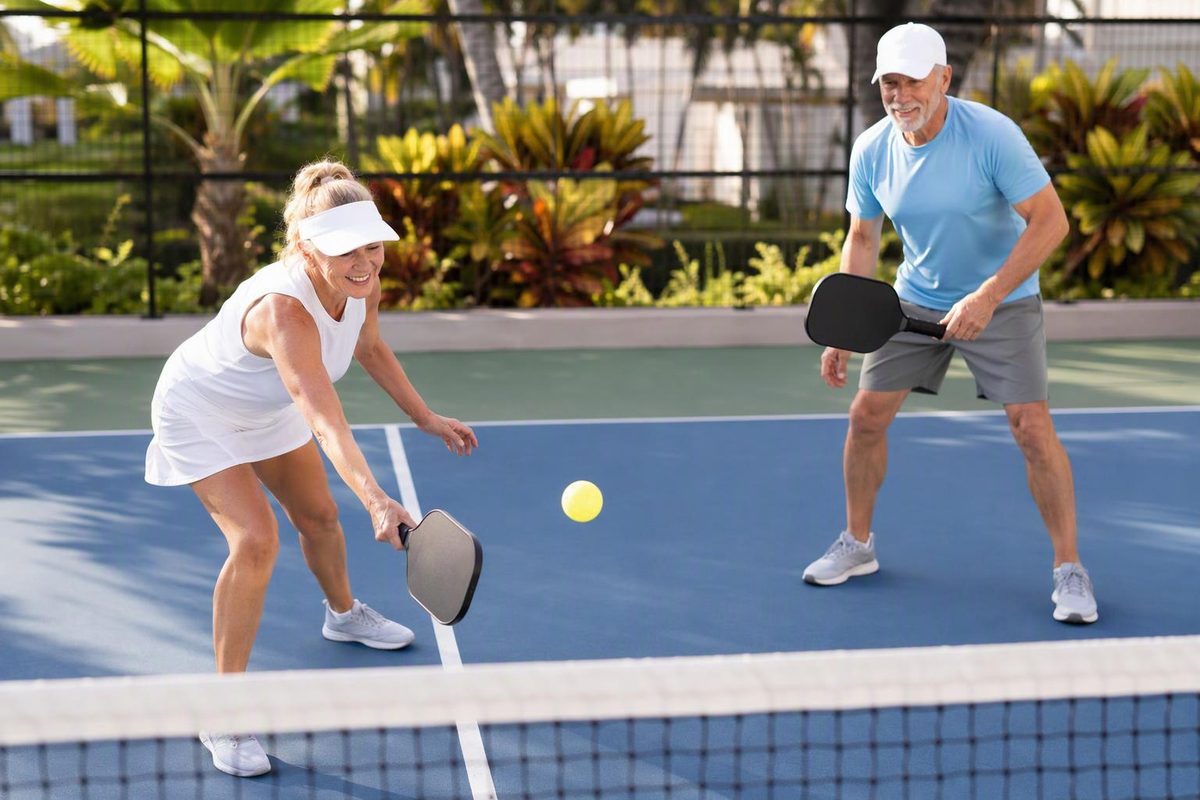
A dink in pickleball is a soft, controlled shot played after the ball bounces, usually from near the Kitchen line, that clears the net and lands in the opponent’s Kitchen (the non-volley zone).
The goal is not simply to hit the ball slowly. A useful dink arcs downward and stays low, making it difficult for the opponent to attack with a hard shot. USA Pickleball describes a dink as a shot played on a bounce from the non-volley zone and intended to land in the opposing non-volley zone (USA Pickleball).
Is a dink legal from inside the Kitchen?
Yes—if you let the ball bounce first.
The Kitchen’s formal name is the non-volley zone, not the “no-entry zone.” A volley is a shot struck before the ball bounces. Players may legally stand in the non-volley zone whenever they are not volleying (USA Pickleball).
That creates two common situations:
- You dink after the ball bounces while standing outside the Kitchen: legal.
- You step into the Kitchen and dink after the ball bounces: also legal.
If you step in to play a short dink, move back out when the ball gives you time. Before you can legally volley again, both feet must make contact outside the Kitchen. For the full distinction between entering the zone and volleying from it, see The Kitchen Rule, Finally Clear.
What a good dink looks like
Watch the ball’s path rather than judging the shot by speed alone. A sound dink:
- clears the net with enough margin to avoid an unnecessary error;
- descends into the opponent’s Kitchen;
- stays low enough that the opponent must contact it from below net height; and
- gives you time to recover to a balanced position.
A high dink that lands in the Kitchen is still a dink, but it may be attackable. A very low attempt that clips the net is not useful either. Aim first for a safe arc and reliable landing, then work on keeping the bounce low.
How to hit a basic dink
Start at the Kitchen line in a balanced stance with your paddle in front.
- Track the bounce. Let the ball enter a comfortable contact area instead of reaching at the last moment.
- Use a short swing. Move from the shoulder with a quiet wrist; avoid a large backswing.
- Contact in front. Meet the ball ahead of your body with the paddle face slightly open.
- Lift, do not slap. Send the ball on a gentle arc over the net.
- Recover immediately. Return the paddle to a ready position and regain your balance before the opponent hits.
These cues match USA Pickleball’s guidance to use an open paddle face, a gentle lifting motion, shoulder movement and little or no backswing (USA Pickleball).
Use simple placement at first. Send the ball toward the middle of the opposing Kitchen rather than aiming near a sideline. Once you can keep it low and consistent, vary the target between the middle, forehand and backhand. Changing locations prevents an opponent from settling into one comfortable pattern (USA Pickleball).
Dink versus drop
Both are soft shots intended to land in the Kitchen, but the usual court position differs:
- A dink is normally played after a bounce when you are already near the Kitchen line.
- A drop is played from farther back—often as the third shot or from the transition area—to help your team move forward.
Think of the drop as a way to approach the Kitchen line and the dink as a way to manage the rally once you are there. USA Pickleball similarly defines a drop as a soft shot from deep in the court that lands in the opposing non-volley zone and lets the hitting team advance (USA Pickleball).
A simple partner dink drill
Setup: Stand opposite a partner, each just behind the Kitchen line. Begin straight across from one another and use half the court so control matters more than coverage.
Action: Feed the ball gently, then rally using only shots that bounce in the Kitchen. Count consecutive successful dinks. Start with a target of 10, then try 20. If either player pops the ball above a comfortable attack height, restart the count even if it lands in the Kitchen.
Checkpoint: After every shot, ask: Was I balanced before my partner made contact? If not, shorten the swing and recover the paddle in front sooner. When straight-ahead dinking becomes reliable, repeat the drill diagonally to practice crosscourt control.