
Understand the Soft Shot That Controls Kitchen Rallies
Learn what a dink means in pickleball, how it differs from a drop, when Kitchen contact is legal, and how to hit and practice this soft control shot.
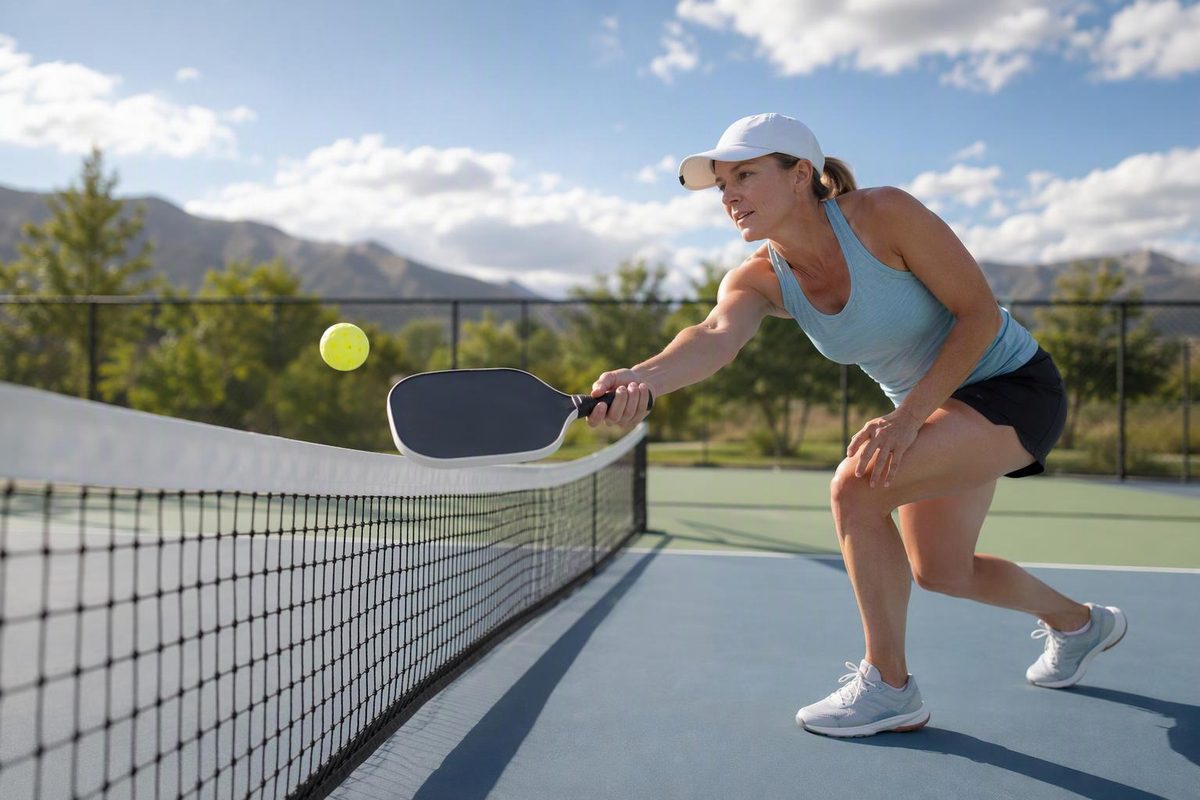
A dink in pickleball is a soft, controlled shot hit from near the Kitchen line and intended to bounce in the opponent’s Kitchen, officially called the non-volley zone. It travels just over the net and stays low after the bounce.
The purpose is usually not to end the rally immediately. A good dink makes an aggressive reply difficult, allowing you to neutralize an opponent until they make an error or lift the ball high enough to attack. USA Pickleball describes the dink as a way to neutralize an opponent and wait for an attackable ball.
Choose where the shot starts and where it is intended to bounce; the tool identifies the most likely shot.
Is the Shot a Dink or a Drop?
Classify the shot by its starting point and intended landing area.
A soft shot from near the Kitchen line that is intended to bounce in the opponent’s Kitchen fits the usual meaning of a dink.
Source: USA Pickleball guidance on dink shots and third-shot drops, as cited in the article.
A Dink Is a Shot, Not a Rule
“Dink” is the name of a shot, not a special rules category. Calling a shot a dink does not change where players may stand or whether the opponent may volley it.
Once the serve and return have each bounced, players may volley the ball or play it after a bounce. A player may not volley while touching the Kitchen or its line, but may stand in the Kitchen to hit a ball that has bounced. Those distinctions appear in USA Pickleball’s 2026 rules summary.
You may therefore step into the Kitchen to retrieve a short dink after it bounces. There is no rule requiring you to leave before the next shot, although recovering toward the Kitchen line usually puts you in a better position to cover the next ball.
The restriction applies when volleying. If you hit the ball before it bounces, you cannot be touching the Kitchen or its boundary line. Your momentum from that volley also cannot carry you into the Kitchen. For the full distinction between entering the Kitchen and volleying from it, see The Kitchen Rule, Finally Clear.
A well-hit dink is intended to bounce, but the name does not protect it from a volley. An opponent may take it out of the air if they can do so without touching the non-volley zone as part of the volley. If the dink sits high enough for that, it is attackable.
Dinks and Drops Start From Different Positions
Dinks and drops are both soft shots that commonly land in the Kitchen. Their usual starting positions and tactical jobs are different.
| Shot | Usual Starting Point | Main Job |
|---|---|---|
| Dink | Near the Kitchen line | Sustain or change a soft exchange |
| Drop | Farther back in the court | Neutralize opponents and create time to advance |
A dink is usually played while both teams are forward near their Kitchen lines. It may be directed safely into open space, used to move an opponent or kept low until an attackable ball appears.
A drop is usually hit from farther back, often as the third shot. The hitting team uses it to reduce the advantage of opponents already at the Kitchen line and create time to move forward.
USA Pickleball calls the third-shot drop a soft, controlled shot similar to a longer dink and explains that it can give a team time to move forward in its drop-versus-drive guidance.
A soft shot from deep in the court is therefore more accurately called a drop, even if it lands in the same place as a dink. Opponents may volley either shot when they can do so legally; a drop being volleyed is not automatically a mistake.
A Basic Dink Uses a Compact, Relaxed Motion
Start near the Kitchen line with your knees relaxed and your paddle in front. The motion should be controlled rather than a shortened version of a hard groundstroke.
- Track the bounce. Move your feet so the ball stays in front of you instead of reaching beside your body.
- Use a compact motion. Guide the paddle forward and slightly upward without a long backswing.
- Keep the grip relaxed. A tight grip and abrupt swing tend to send the ball too high or too deep.
- Choose a generous target. Aim well inside the opponent’s Kitchen rather than trying to clip a line.
- Recover after contact. Return the paddle to a ready position and rebalance near the Kitchen line.
USA Pickleball’s introductory dinking guidance likewise emphasizes a small swing, an upward-angled paddle face and a loose grip.
Use the opponent’s contact point as feedback. If opponents regularly strike your dink above net height, the ball is probably sitting too high. If they must contact it below net height after a bounce, producing an aggressive reply is more difficult.
Dinking Works Best Against Players Already Forward
When all four doubles players are near the Kitchen line, a low dink can prevent opponents from attacking while making them move and play another controlled ball. The exchange continues until someone misses, leaves the ball too high or creates a favorable opening.
A dink is not automatically the right shot merely because you are standing at the Kitchen line. If an opponent remains near the baseline, a short dink may help that player advance. A deeper shot can keep the opponent back and be the better tactical choice, as USA Pickleball’s dink strategy guidance notes.
The same distinction applies when a ball rises above the net. Continuing to dink may surrender an opportunity. An attackable ball can be played more firmly, provided you can control it and follow the Kitchen volley rules.
A Cooperative Drill Builds Dink Control
Stand opposite a partner at the Kitchen line. Dink straight ahead and try to complete 10 consecutive shots that bounce in the Kitchen.
Keep the first round cooperative. Use the middle of the Kitchen and count only successful sequences. The objective is to repeat a compact swing and predictable arc rather than beat your partner.
Once you reach 10, alternate one dink toward the middle and one toward the sideline. Maintain enough margin that the placement change does not cause the ball to rise to an easy attacking height or land beyond the Kitchen.
Use the same pattern in doubles when all four players are forward: keep the ball low, move opponents with safe targets and attack only when a ball rises to a comfortable height.