
How to Hold a Pickleball Paddle: A Beginner’s Grip Guide
Find a Continental grip, check your hand position, use light grip pressure, and practice forehand and backhand dinks without regripping.
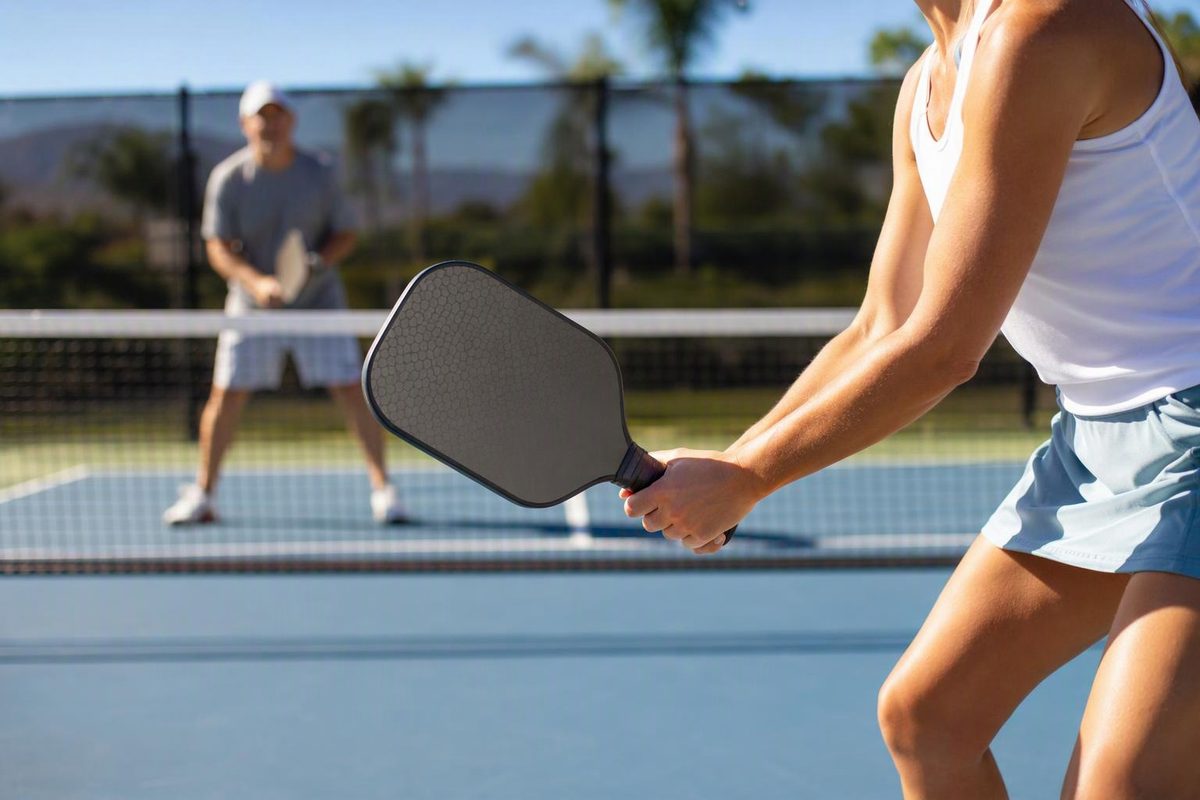
Start with a Continental grip: hold the paddle like a hammer, wrap your fingers around the handle, and keep your squeeze light but secure. This is a useful beginner grip because you can play forehands and backhands without changing your hand position—especially helpful during quick exchanges at the Kitchen line. The PPA Tour describes it as a neutral grip.
Find the grip in four steps
- Hold the paddle on edge. Use your non-playing hand to support it in front of you. Keep both paddle faces vertical and the thin edge uppermost, like a book standing on its bottom edge—not flat like a tray.
- Take the handle as if it were a hammer. Imagine tapping a nail with the paddle’s thin edge. Wrap your fingers around the handle, with your thumb resting around the handle rather than stretched up the paddle face.
- Check your index-finger knuckle. Look from the butt end toward the paddle head, keeping the thin edge uppermost. The large knuckle at the base of your index finger should rest on the upper-right diagonal flat of the handle if you’re right-handed, or the upper-left diagonal flat if you’re left-handed. These flat surfaces are called bevels; on rounded handles, they may be harder to distinguish.
- Spread your fingers comfortably. Let your index finger sit a little apart from the others rather than bunching everything into a tight fist. Start with your little finger just above the butt cap and your whole hand supported by the handle.
The hammer cue, knuckle placement and slightly spread hand follow PickleballMAX’s Continental-grip guidance.
Checkpoint: Move the paddle slowly from a forehand position to a backhand position. You should be able to present either face to an imaginary ball without regripping. Don’t force your wrist into an uncomfortable bend to make that happen; recheck your hand position first.
How tightly should you squeeze?
For dinks and other soft shots, try about 3 out of 10, where 10 means squeezing as hard as you can. The PPA Tour recommends this light-pressure cue for dinks, drops and absorbing faster balls.
Treat the number as a feel cue, not a measurement. The handle should stay secure, but your hand and forearm shouldn’t feel clenched throughout the rally. Light does not mean floppy: keep enough support to control the paddle face.
If the handle slips, first dry your hand and grip, then check your hold. If soft shots keep popping up, try easing your squeeze and shortening the swing—but also check the paddle angle. Grip pressure is only one part of the shot.
Practice the hold with alternating dinks
With a partner, stand just behind opposite Kitchen lines. Keep your paddle in front of your body with your elbow comfortably bent.
- Ask your partner to feed gently to your forehand and backhand sides in turn. Let each ball bounce before hitting.
- Return each feed with a dink, aiming into your partner’s Kitchen.
- Keep the same Continental grip for both sides.
- After ten contacts, pause and check your knuckle position and hand tension. Then swap roles.
Your checkpoint is a secure handle and a controlled paddle face on both sides—not a long rally at any cost. If you start squeezing harder or changing grips on every ball, slow the feeds down.
For the shot itself, see how to hit a dink. Once this neutral hold feels comfortable, you can explore an Eastern grip for forehand-focused shots. You don’t need to learn several grips before your first game.