
Nine Upgrade-Worthy Paddles—and How to Find the One That Fits Your Game
Nine profile-based picks match upgrades to softer control, easier depth, quicker hands, off-center stability or greater reach.
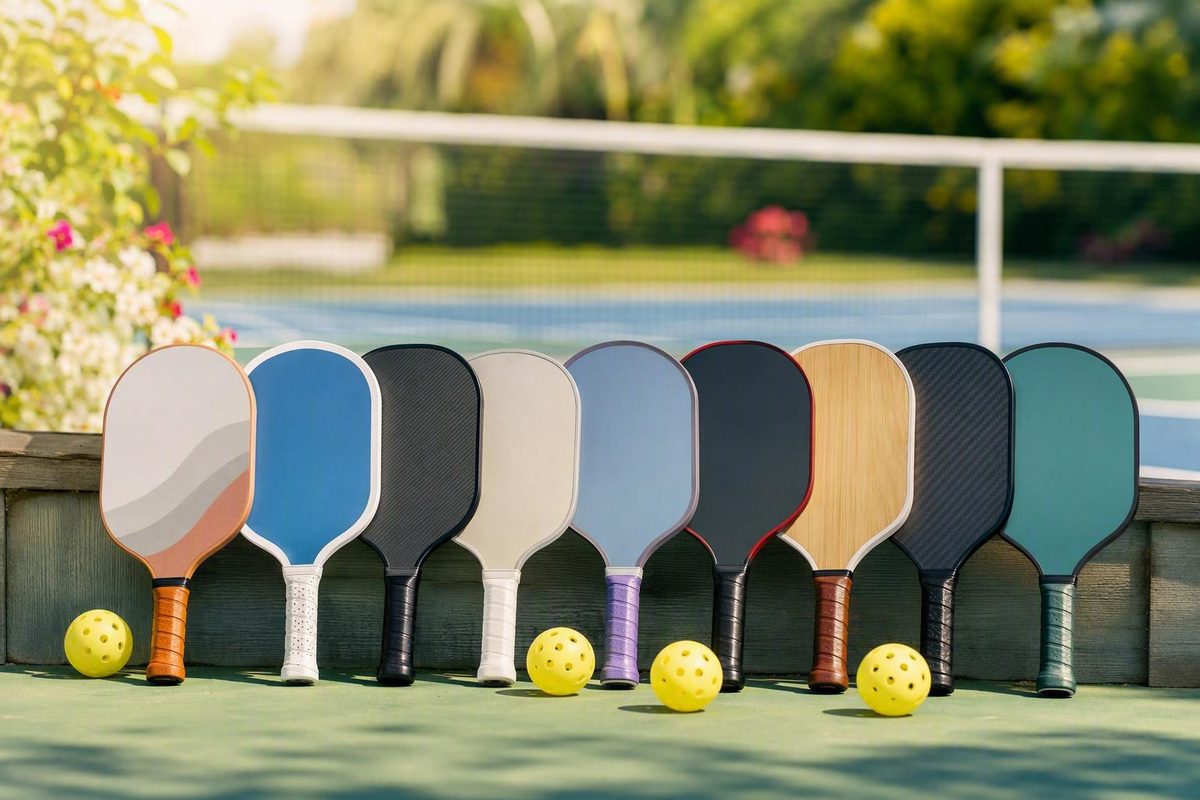
The best pickleball paddles for intermediate players are not necessarily the most powerful, expensive, or technologically ambitious. The right upgrade makes your developing game more repeatable while adding the capability you need next: softer control, easier depth, quicker hands, greater off-center stability, or more reach.
These are profile-based candidates, not an objective ranking produced through Pickleball Learn testing. The shortlist synthesizes recommendations from specialist reviewers and editorial buying guides that use different methods, terminology, and scoring systems. Several sources also earn commissions through affiliate links or discount codes. Their rankings are useful starting points, not directly comparable test results or universal verdicts.
For an undecided player, the safest baseline is usually a forgiving, maneuverable 16 mm all-court paddle. Compare it with one option that leans deliberately toward control or power. The differences you feel during drops, resets, blocks, counters, and off-center contacts will tell you more than a marketing label.
Source information reviewed September 7, 2026. Prices below are dated publisher listings, not verified current offers. Exact configurations, inventory, warranties, return terms, and tournament eligibility should be confirmed before purchase.
Quick picks: the strongest candidates by player profile
The Honolulu J2CR 16mm is the leading balanced demo candidate—not because it has been proved superior, but because it appears in two supplied intermediate-player editorial lists. Matt’s Pickleball ranked it third, while The Kitchen also included it. Repeated inclusion shows that more than one editorial team considered it relevant; it does not establish universal quality or fit.
The disagreement at the top of those lists is equally useful. Matt’s Pickleball ranked the 11SIX24 Vapor Power 2 16mm first and the 11SIX24 Pegasus Power 2 16mm second. The Kitchen selected the Friday Aura as its first choice. These are separate editorial judgments reached through different processes, not placements within one shared test. Matt’s Pickleball explains its 2026 ranking and testing approach.
The nine primary candidates
- Best balanced demo starting point: Honolulu J2CR 16mm. It has cross-list recognition and makes sense as a reference against more specialized options.
- Best full-court candidate according to Matt’s Pickleball: 11SIX24 Vapor Power 2 16mm. Consider it if you want broad capability with offensive upside.
- Best soft, control-first candidate according to The Kitchen: Friday Aura. It suits players whose pace is adequate but whose drops, resets, and defensive blocks need a calmer response.
- Additional control or balanced-control candidates: Enhance DUO and Six Zero Coral. Both appear in The Kitchen’s list, while Matt’s list contains similarly named DUO and Coral configurations. Treat the exact model identity as unresolved until the generation, shape, and thickness are confirmed.
- Best documented pure-control value candidate: Vatic Pro Prism Flash 16mm. Pickleball Effect characterized it as exceptionally control-oriented, with very low power and pop within that publication’s comparison.
- Aggressive-play candidates: 11SIX24 Pegasus Power 2 16mm and Bread & Butter Loco. Both suit players seeking more offensive help, but a livelier response may reduce margin on blocks and resets.
- Budget-conscious control candidate: Turbo MPP Widebody. Matt’s Pickleball positioned it for budget-minded or control-oriented intermediates.
Quick-pick comparison
| Primary candidate | Attributed fit | Core thickness supplied | Source-listed price | Principal trade-off to test |
|---|---|---|---|---|
| Honolulu J2CR | Balanced all-court candidate appearing in two lists | 16 mm | $195 in July 2026 | Does it provide enough offense? |
| 11SIX24 Vapor Power 2 | Matt’s first-ranked full-court option | 16 mm | Unavailable because supplied price information conflicts | Is the response predictable on soft shots? |
| Friday Aura | The Kitchen’s soft, control-first choice | Unavailable | $129 in July 2026 | Can you create sufficient depth and finishing pace? |
| Enhance DUO | Control-oriented candidate from The Kitchen | Unavailable | $174.99 in July 2026 | Exact model and configuration require verification |
| Six Zero Coral | Balanced or control-favoring alternative | Unavailable | $200 in July 2026 | Does it offer enough easy power under pressure? |
| Vatic Pro Prism Flash | Pickleball Effect’s pure-control selection | 16 mm | $99.99 in its 2026 review | Very low attributed power and pop |
| 11SIX24 Pegasus Power 2 | Matt’s second-ranked aggressive option | 16 mm | Unavailable because supplied price information conflicts | Added pace may reduce reset and block margin |
| Bread & Butter Loco | Aggressive candidate appearing in two lists | Unavailable | $199 in July 2026 | Test hand speed and short-game predictability |
| Turbo MPP Widebody | Budget or control-oriented candidate | 16 mm | $119.99 in Matt’s 2026 list | May lack the offensive ceiling some players want |
Table sources: The Kitchen’s July 2026 guide supplied the Aura, DUO, J2CR, Coral, and Loco prices; Matt’s 2026 list supplied the rankings, identified its ten ranked paddles as 16 mm, and listed Turbo at $119.99. See The Kitchen’s dated recommendations and affiliate disclosure. Pickleball Effect listed the Prism Flash at $99.99, 7.91 ounces, and a swingweight of 114. See its 2026 control-paddle comparison.
Short answer: If you do not know your priority, demo the Honolulu J2CR against either the Friday Aura or the 11SIX24 Pegasus Power 2. That gives you one balanced reference and one paddle that moves deliberately toward control or offense.
What an intermediate player actually needs from a paddle
“Intermediate” is not an official equipment category. The Kitchen describes its intended audience as approximately 3.5–4.0-plus, but that is an editorial framing rather than a universal rating boundary.
A more useful definition comes from observable progress. An intermediate player commonly:
- makes clean contact more consistently;
- understands basic positioning and transitions;
- sustains longer rallies;
- uses more than serves, returns, and drives;
- is developing drops, dinks, blocks, resets, rolls, and counters;
- recognizes whether a point was lost through execution, positioning, or shot selection;
- needs a paddle that works from both the baseline and the non-volley zone.
A beginner may primarily need an accessible sweet spot and comfortable handling. A highly specialized advanced player may willingly sacrifice forgiveness for a specific combination of reach, pace, spin, or precision. Intermediate players often sit between those extremes: skilled enough to notice performance differences but still likely to benefit from margin on imperfect contact.
Balance matters more than maximum performance
At this stage, a paddle should provide enough forgiveness to keep slight mishits playable, enough control to support drops and resets, and enough offense to attack a high ball or apply pressure from the baseline. Its strongest trait should not undermine the shots you still depend on.
For example:
- A player who produces pace naturally may gain more from a calmer response and broader effective sweet spot.
- A player with reliable touch but short returns may benefit from easier depth.
- A quick net player may prioritize maneuverability over maximum baseline leverage.
- A player who misses toward the sides may gain more from lateral stability than extra reach.
- A two-handed backhand player may reject an otherwise suitable paddle if the handle feels cramped.
Playing style and improvement goals therefore matter more than the intermediate label alone. If your drives are strong but third-shot drops regularly float high, a control-oriented paddle is more logical than a power upgrade. If touch is dependable but attacks rarely pressure opponents, an all-court or power-leaning option is a better experiment.
The safest default
If you cannot identify a clear specialty, begin with a forgiving all-court paddle rather than an extreme. A reasonably maneuverable 16 mm model gives you a practical reference point for deciding whether you want a softer response, more pop, a wider hitting area, or greater reach.
That is a baseline, not a prescription. Some intermediates prefer thinner cores, elongated designs, or distinctly power-oriented construction. The important question is what they receive in exchange for the margin they give up.
Do not expect a more advanced or expensive paddle to raise your rating by itself. Equipment can make certain shots easier to reproduce, but it cannot replace drilling, movement, positioning, shot selection, or centered contact. NYC Pickleball’s selection framework similarly emphasizes direct trial and cautions against expecting new technology alone to produce skill progression. Its guide covers thickness, shape, weight, handle fit, price, and warranty.
Best balanced and all-court candidates
An all-court paddle should remain usable throughout a point: serve, return, transition, reset, dink exchange, counter, and put-away.
Pickleball Learn did not conduct original head-to-head testing of these models. The ordering below synthesizes attributed editorial recommendations, and the publishers did not necessarily use compatible methods.
Honolulu J2CR 16mm: the balanced reference candidate
The J2CR is the most practical first demo because Matt’s Pickleball ranked it third and The Kitchen also included it. That recurrence puts it on a credible shortlist without proving that it will outperform another paddle in your hands.
Who should demo it: A player who wants one paddle for baseline drives, transition defense, kitchen exchanges, and recreational doubles without committing to a control or power extreme.
Potential weakness: A balanced paddle can feel insufficiently specialized. A player seeking a very soft response may find it too lively, while someone wanting effortless put-away pace may prefer more rebound or leverage.
Deciding shots:
- Deep returns aimed at a narrow target.
- Third-shot drops from both sides.
- Transition-zone resets.
- Passive blocks against hard drives.
- Compact counters at the kitchen.
- Controlled and full-speed drives.
The question is not whether it “does everything.” It is whether it avoids a meaningful weakness in the shots you use most.
11SIX24 Vapor Power 2 16mm: Matt’s full-court leader
Matt’s Pickleball ranked the Vapor Power 2 first in its intermediate list and said its recommendations combined on-court play with performance measurements. That placement represents one reviewer’s assessment of full-court suitability, not an industry-wide result.
Who should demo it: A player who wants an all-court foundation with more offensive upside than a pure-control paddle, especially if creating depth currently requires too much effort.
Potential weakness: The “Power” name makes short-game testing essential. Determine whether blocks, resets, and abbreviated counters leave the face faster than expected.
Deciding shots:
- compact returns against hard serves;
- drops from behind the baseline;
- resets from below net height;
- passive blocks;
- kitchen counters;
- controlled and full-speed drives.
If its offensive help appears on full swings while the soft game remains predictable, it may work as an all-court upgrade. If blocks repeatedly travel deep or drops require excessive deceleration, a calmer paddle may fit better.
Six Zero Coral: the balanced-control alternative
The Kitchen included a Six Zero Coral as a balanced option, while Matt’s list included a Coral Hybrid among its control and soft-play selections. The supplied materials do not establish that those names identify the same configuration.
Who should demo it: A player who values control and consistency but does not want a pure-control specialist.
What to verify: The full model name, generation, shape, thickness, handle dimensions, and listed weight range.
Potential weakness: A control-favoring response may leave serves, returns, or baseline drives short when you are tired or under pressure.
Deciding shots: Deep returns, crosscourt dinks, transition resets, defensive blocks, counters, and drives—especially contacts slightly outside the center.
Why 16 mm is a practical starting point
Thicker cores are generally associated with a calmer response, more dwell time, and greater forgiveness. Thinner cores commonly rebound faster and feel livelier. These are tendencies rather than guarantees because shape, balance, face construction, core design, perimeter weighting, and player technique all affect the result.
All ten paddles in Matt’s ranked intermediate list were identified as 16 mm models, illustrating how common that thickness was within one reviewer’s shortlist. Retail catalogs also place thinner paddles in intermediate categories, so 16 mm should be treated as a comparison baseline rather than an eligibility rule.
Best control and forgiveness candidates
A control paddle should make lower-speed contact easier to predict. It should help you manage incoming pace without requiring last-second grip changes or exaggerated deceleration.
It cannot fix technique. A paddle does not choose the target, establish a stable contact point, or shorten an oversized backswing. It can, however, provide more margin while those skills improve.
Friday Aura: soft response and control-first positioning
The Kitchen selected Friday Aura as its leading intermediate recommendation and described it as especially soft and control-oriented. Its source-listed price was $129 in July 2026.
Best fit: A player who creates sufficient pace independently and wants more confidence on drops, dinks, resets, and defensive blocks.
What to test: Do not judge it only through cooperative kitchen play. Hit full returns and baseline drives late in the session, when fatigue makes easy depth more important.
Possible trade-off: A calm response may become limiting if you depend on the paddle to supply pace. If returns repeatedly land short or attackable balls are difficult to finish, compare it with a balanced model.
Enhance DUO: a candidate requiring configuration verification
The Kitchen included an Enhance DUO, while Matt’s list contained a DUO Widebody among its control and soft-play options. Similar names should not be assumed to identify the same product.
Best fit: A player prioritizing soft-game predictability who wants to explore whether a more forgiving format improves blocks and resets.
What to verify before purchase: Exact model name, generation, shape, thickness, listed weight range, handle dimensions, current product availability, and tournament eligibility.
Possible trade-off: Do not infer maneuverability from the family name. Compare hand speed and balance directly with a more compact reference paddle.
Vatic Pro Prism Flash 16mm: pure control near $100
Pickleball Effect presented the Prism Flash as its pure-control selection and listed it at $99.99, 7.91 ounces, and 114 swingweight. Those are reviewer-supplied figures rather than measurements made by Pickleball Learn.
The same reviewer assigned it very low power and pop within that publication’s comparison. Those proprietary scores should not be compared numerically with another publisher’s ratings, but the within-review conclusion is clear: this is a control-first candidate, not an easy-power choice.
Best fit: A player who already supplies pace and wants predictable touch, placement, drops, and resets.
Possible trade-off: Players who struggle to reach return depth or create speed from compact swings may find it demanding. Low pop can help on resets but require more work on counters.
What to test:
- deep returns from a neutral stance;
- third-shot drops after lateral movement;
- resets against increasingly hard feeds;
- compact punch volleys;
- overheads and put-aways;
- end-of-session depth.
11SIX24 Jelly Bean 2 Vapor: an additional control candidate
The 11SIX24 Jelly Bean 2 Vapor appears in Pickleball Effect’s control comparison. It is not one of the nine primary candidates in this guide and should not automatically be treated as the same product as The Kitchen’s 11SIX24 Vapor Jelly Bean listing.
The similar names make exact configuration verification essential. Match the full product name, generation, shape, thickness, and identifying details before comparing prices or tournament status.
Why control helps—but does not cure
A predictable response can give an improving player more margin on:
- third-shot drops;
- transition resets;
- crosscourt dinks;
- blocks against hard drives;
- short-angle placement;
- off-speed counters.
Technique still determines paddle angle, contact point, grip pressure, swing path, and target selection. If every drop uses an open face and oversized backswing, a control paddle may reduce the error without correcting its cause.
Standard and widebody shapes generally offer broader hitting areas and greater resistance to poor lateral contact than narrow elongated designs. That is a category tendency, not a model-specific guarantee.
Best power and aggressive-play candidates
A power-leaning paddle makes sense when touch and placement are reliable but offense requires too much effort. The goal is to gain depth or finishing speed without losing control of returns, blocks, and transition shots.
11SIX24 Pegasus Power 2 16mm: aggressive upside
Matt’s Pickleball ranked the Pegasus Power 2 second and positioned it toward aggressive play. That makes it a credible demo candidate, not an independently established power champion.
Who should demo it: A player with reliable dinks and resets who wants easier drive pace, stronger counters, or more finishing help.
Primary risk: Added rebound can turn a compact defensive contact into a ball that travels too deep. A paddle that feels exciting on serves and drives may become difficult when you are late, stretched, or blocking below net height.
Deciding shots:
- Deep returns at roughly three-quarter effort.
- Compact counters.
- Passive blocks against hard drives.
- Transition resets.
- Speedups from below net height.
- Full drives after several minutes of soft play.
If the paddle behaves well only when you are swinging aggressively, it may be too specialized for your current game.
Bread & Butter Loco: another attacking candidate
Bread & Butter Loco appears in both supplied intermediate-player editorial lists. The Kitchen listed it at $199 in July 2026. Recurrence justifies a place on the demo list but does not prove that both publications assessed an identical configuration or used comparable methods.
Who should demo it: A confident player who attacks frequently and wants more offensive assistance without choosing solely from a dedicated power category.
Primary risk: Watch for unpredictable depth when returning pace. A power paddle is tested not only by how hard it hits, but by how it behaves when the opponent supplies the speed.
Deciding shots: Drive returns, counters, blocks, transition resets, and speedups. Compare it directly with a forgiving all-court paddle. If the added offense wins only a few more attacking exchanges but creates many more long blocks and resets, the trade is unlikely to be worthwhile.
What generally creates a power tendency
Power-oriented designs often combine some of the following:
- thinner cores;
- faster rebound;
- elongated leverage;
- greater effective swingweight;
- more head-heavy balance;
- livelier construction.
Control-oriented designs commonly move toward thicker cores, broader sweet spots, steadier response, and easier pace absorption. No single specification decides the category. A 16 mm paddle can still be powerful, and a thinner paddle is not automatically uncontrollable. Pickleball Nation’s comparison treats thickness, shape, weight, balance, and construction as interacting tendencies.
Elongated paddles can add reach and leverage, but narrower geometry commonly reduces sweet-spot width or side-to-side stability compared with wider alternatives.
- Doubles players should test hand speed, defensive blocks, and stability during rapid exchanges.
- Singles players should test reach, passing shots, serves, returns, and baseline leverage.
Shape alone does not make a paddle best for either format. Bring one forgiving all-court paddle to every power-paddle demo so you can judge whether the extra pace is genuinely useful or merely more noticeable.
How thickness, shape, weight, and handle fit change the choice
Specifications are useful when they help predict a trade-off. They become misleading when treated as performance guarantees.
Core thickness: a tendency, not a verdict
Thinner cores generally return energy more quickly, producing more rebound and pop. Thicker cores generally provide a calmer response, greater dwell time, and more forgiveness. A 16 mm paddle is therefore a sensible starting point for a player still refining drops, resets, and defensive blocks.
It is not mandatory. A player with reliable touch may prefer a livelier 13 or 14 mm model, while a particular 16 mm construction may still feel too fast for someone else.
Shape: hitting area, reach, and leverage
Standard shapes generally balance maneuverability, sweet-spot width, and usable reach.
Widebody shapes tend to emphasize a broad hitting area and off-center forgiveness.
Hybrid shapes attempt to combine useful width with additional reach, although “hybrid” is not a standardized geometry.
Elongated shapes commonly add reach and leverage. Potential costs include slower handling, a narrower sweet spot, or less resistance to twisting on lateral mishits.
Pickleball Central’s guide similarly distinguishes standard shapes for forgiveness and hand speed, hybrids for blended traits, and elongated designs for reach and power. It also explains weight, swingweight, twistweight, grip, and thickness as separate fit variables.
Static weight, swingweight, and twistweight
These measurements answer different questions:
- Static weight is the paddle’s scale weight.
- Swingweight describes how heavy it feels while moving through a swing.
- Twistweight describes resistance to rotation on off-center contact.
Two paddles with the same static weight can feel different if one carries more mass toward the head.
In practical terms:
- Greater swingweight may help depth and stability but feel slower during hand battles.
- Lower swingweight may improve maneuverability while offering less assistance through contact.
- Greater twist resistance can preserve direction on imperfect blocks.
- Static weight alone cannot reveal whether a paddle will feel quick, head-heavy, or stable.
There is no universal “midweight” definition in the supplied guides. Published ranges include 7.3–8.4 ounces, 7.5–8.2 ounces, and 7.9–8.2 ounces, depending on the publisher. Treat the upper-seven- to low-eight-ounce area as a broad middle band, then test the exact unit rather than relying on the label.
Handle length and grip comfort
Handle fit can override every headline performance claim. If the grip encourages excessive tension or leaves insufficient room for your backhand, the paddle is a poor match even if its power and control appear ideal.
Players with two-handed backhands should test handles around 5.25–5.5 inches or longer, rather than treating either figure as a universal minimum. Hand size, grip spacing, choke-up preference, and throat geometry all affect usable room.
When choosing grip circumference:
- Start with the smaller size if you are genuinely between two comfortable options.
- Add an overgrip if you need more circumference or cushioning.
- Test forehand-to-backhand changes at game speed.
- Notice whether you squeeze excessively to stabilize the paddle.
- Reassess comfort after a full session.
A smaller grip can be built up; an oversized handle is harder to reduce.
Face material is not destiny
Carbon fiber, fiberglass, graphite, and other material descriptions provide construction context, but none determines power, spin, control, or durability by itself. Performance emerges from the interaction among:
- face layup and stiffness;
- surface texture;
- core construction and thickness;
- paddle shape;
- perimeter design;
- static weight and balance;
- swingweight and twist resistance;
- handle geometry;
- player technique.
Choose according to observed ball response and handling, not the assumption that one material label guarantees a result.
Best values under $100, $150, and $200
A meaningful upgrade can cost less than $100, while premium listings can approach $300. Higher price does not guarantee a better fit. Spend enough to obtain the response, shape, handle, and purchase protections you need—not enough to make the paddle feel aspirational.
Price note: Every figure below is a dated source listing, not a guaranteed current offer. Prices, discounts, inventory, bundles, and promotional codes can change. Confirm them before publication and purchase.
Under $100
Vatic Pro Prism Flash 16mm — $99.99 in Pickleball Effect’s 2026 review
This is the clearest documented choice for a control-first player near the $100 line. The reviewer’s assessment positions it for touch and predictability rather than effortless depth.
Choose it if:
- you generate your own pace;
- you want a calmer response;
- drops and resets matter more than maximum pop;
- you want a comparatively accessible entry price.
Do not buy it solely because it is inexpensive. If low power makes you overswing, it may not be good value for your game.
11SIX24 Vapor Jelly Bean — $99.99 in The Kitchen’s July 2026 listing
This is an additional under-$100 candidate, not one of the nine primary picks. Because similarly named Jelly Bean products appear elsewhere with different specifications and prices, verify the exact generation, shape, thickness, product name, and tournament status before buying.
$100–$150
Friday Aura — $129 in The Kitchen’s July 2026 guide
Aura is the soft-control candidate in this bracket. It suits a player seeking touch and consistency, provided full returns and baseline drives still reach comfortable depth.
Turbo MPP Widebody — $119.99 in Matt’s 2026 list
Turbo is the budget-conscious or control-oriented alternative. Compare its handling and off-center response directly with Aura rather than inferring performance from the “Widebody” name.
Ask:
- Which paddle produces deeper returns with the same effort?
- Which creates fewer floating resets?
- Which remains quicker during counters?
- Which grip stays comfortable after repeated games?
- Which loses less direction on off-center blocks?
As broader market context, Pickleball Warehouse listed the Volair Mach 1 Forza 16 at $119.99 among its intermediate-category products. Retailer placement, customer ratings, and best-seller labels do not establish superior performance. The retailer category provides dated prices and specifications rather than an independent ranking.
$150–$200
| Candidate | Source-listed price | Profile to investigate |
|---|---|---|
| Enhance DUO | $174.99 in July 2026 | Control-oriented play; exact configuration requires verification |
| Honolulu J2CR | $195 in July 2026 | Balanced all-court reference |
| Bread & Butter Loco | $199 in July 2026 | More aggressive offense |
| Six Zero Coral | $200 in July 2026 | Balanced or control-favoring play; exact configuration requires verification |
All four prices in this table came from The Kitchen’s July 2026 affiliate-supported guide cited earlier.
The best value is the model that solves your actual problem. Paying $195 for a paddle that clearly improves confidence on resets and blocks may be better value than buying a $100 paddle that you quickly replace. Conversely, there is no reason to approach $200 if the Prism Flash or Turbo provides the response and fit you need.
Calculate ownership value, not just purchase price
Before deciding, compare:
- access to a demo or loaner;
- return conditions;
- restocking fees;
- warranty coverage;
- replacement availability;
- tournament eligibility;
- expected surface wear;
- availability in your preferred weight range.
These factors were not independently verified for the primary recommendations in this guide. Read each seller’s current terms rather than relying on an editorial roundup. A discount is not valuable if it removes the option to return a poor fit.
A 45-minute demo test that makes the final decision easier
Specifications narrow the field. A controlled on-court comparison should make the decision.
Test two or three paddles for 45–60 minutes using the same balls, comparable court conditions, and the same drill sequence. Changing balls, partners, or intensity between paddles makes the comparison less useful. A retailer-authored selection guide likewise recommends a 45–60-minute comparison covering serves, returns, drives, dinks, resets, and blocks.
Minutes 0–8: serves and returns
Hit ten to fifteen serves from each side. Alternate among comfortable depth, a smaller directional target, and higher pace.
Then hit returns against the same server or feed. Track:
- easy depth;
- directional control;
- frequency of long misses;
- depth when contact is slightly late;
- effort required for a deep return.
A paddle that produces impressive serve speed but unreliable return depth may not be the upgrade you need.
Minutes 8–15: drives
Hit forehand and backhand drives from consistent feeds, using controlled and full swings.
Notice:
- how quickly the ball exits the face;
- whether the intended trajectory is easy to reproduce;
- whether you can reduce pace without losing direction;
- whether the paddle encourages overswinging;
- how much preparation time the swing requires.
Judge spin by the resulting trajectory and predictability, not by surface appearance or marketing language.
Minutes 15–27: drops, dinks, and resets
Spend the largest block here. These shots reveal whether a paddle’s offense comes at too high a cost.
Test:
- straight and crosscourt third-shot drops;
- drops after lateral movement;
- cooperative and competitive dinks;
- resets from midcourt;
- resets from below net height;
- soft blocks against hard drives.
Record how often a reasonable swing produces a playable result, not merely your single best shot.
Minutes 27–35: volleys, counters, and blocks
Move into faster exchanges using compact volleys, controlled speedups, and counters.
Evaluate:
- hand speed;
- preparation time;
- stability through contact;
- whether the paddle feels head-heavy;
- whether passive blocks stay in;
- whether counters require excessive effort;
- whether the grip shifts at impact.
This comparison is especially useful when testing an elongated power paddle against a wider all-court option.
Minutes 35–40: deliberate off-center contact
Do not test only centered strikes. Intentionally make several contacts:
- toward the tip;
- near each side edge;
- slightly above the handle;
- between the center and outer edge.
Note whether the face rotates, how much pace disappears, and whether the paddle remains comfortable in your hand. A mishit need not perform like centered contact; it should remain manageable.
Minutes 40–45: point play and fatigue check
Finish with realistic points or constrained games. Begin some rallies with a serve, some with a third-shot situation, and some in transition.
Score each paddle from one to five:
| Category | 1 | 3 | 5 |
|---|---|---|---|
| Control | Unpredictable | Usable | Highly repeatable |
| Easy power | Requires excessive effort | Adequate | Depth and pace come naturally |
| Hand speed | Consistently late | Acceptable | Quick and easy to position |
| Off-center stability | Twists noticeably | Playable | Direction remains dependable |
| Grip comfort | Distracting or cramped | Tolerable | Secure and natural |
| End-of-session fatigue | Clearly tiring | Noticeable | Minimal handling fatigue |
Add two written notes:
- Which shot improved most?
- Which shot became less reliable?
Those answers matter more than the total score. A power candidate may score well overall while making your resets materially worse. If resets are your main development goal, that trade-off should decide the purchase.
Test the exact unit when possible
A listed static weight does not fully describe balance, swing feel, grip shape, or sample variation. Test or weigh the retail unit you intend to keep when possible.
Before tournament use, check the exact model name, generation, thickness, and configuration against the current approved-paddle list required by the event. Do not rely on an old retailer badge, packaging, a previous review, or approval of a similarly named product.
Final purchase checklist
Before ordering, confirm:
- [ ] Exact model and generation
- [ ] Core thickness
- [ ] Shape
- [ ] Listed weight range and, if possible, exact unit weight
- [ ] Swing feel and balance
- [ ] Handle length and room for your backhand grip
- [ ] Grip circumference
- [ ] Return policy and restocking conditions
- [ ] Warranty terms
- [ ] Replacement availability
- [ ] Current tournament eligibility for your event
- [ ] Current price, inventory, and discount terms
Frequently asked questions
What skill rating counts as an intermediate pickleball player?
There is no universal equipment definition of “intermediate.” The Kitchen describes its intended audience as roughly 3.5–4.0-plus, but that is an editorial framing rather than an official boundary.
In practical terms, an intermediate player usually makes contact more consistently, sustains rallies, understands basic positioning, and uses a broader selection of shots from the baseline and net. The better buying question is not “Am I officially intermediate?” but “Which recurring error should my next paddle help me manage?”
Is a 16 mm paddle better than a 13 mm or 14 mm paddle for an intermediate player?
Not automatically. A 16 mm core is a useful starting point because thicker designs generally tend toward a calmer response and greater forgiveness. Thinner 13 or 14 mm paddles commonly feel livelier and rebound faster.
Choose 16 mm if you want more margin on drops, resets, dinks, and blocks. Consider 13 or 14 mm if you already have reliable touch and want easier pace or quicker rebound. Construction, shape, balance, and technique can outweigh thickness, so compare actual paddles rather than choosing from one number.
What is the best intermediate pickleball paddle under $100?
The Vatic Pro Prism Flash 16mm is the strongest documented pure-control candidate below that threshold in the supplied reviews. Pickleball Effect listed it at $99.99 and characterized it as a control-first paddle with low power and pop.
The Kitchen also listed an 11SIX24 Vapor Jelly Bean at $99.99 in July 2026, but the exact version requires verification because similarly named Jelly Bean configurations appear elsewhere.
Neither is universally best. The Prism Flash better suits someone who generates pace independently. A player seeking effortless depth should compare it with a balanced or power-leaning model.
Should an intermediate player choose an elongated, hybrid, standard, or widebody paddle?
Choose according to the trade-off you want:
- Standard: a practical balance of maneuverability, reach, and forgiveness.
- Widebody: a broader hitting area and more margin on lateral mishits.
- Hybrid: an attempt to combine useful width with additional reach.
- Elongated: greater reach and leverage, potentially at the cost of hand speed, sweet-spot width, or lateral stability.
An undecided player should begin with a standard, hybrid, or forgiving widebody option. Choose an elongated paddle after confirming that its reach and leverage help more than its narrower geometry hurts.
How do I know whether a recommended paddle is approved for tournament play?
Check the exact model and configuration on the current official list required by your tournament. Match the complete name, generation, thickness, and identifying details rather than assuming approval applies to every paddle in a product family.
Different events may use different approval requirements. Confirm the tournament rules and applicable database shortly before competition; do not rely solely on packaging, an old article, or a retailer filter.
The final decision can remain simple: demo one forgiving 16 mm all-court candidate and one paddle that leans toward your priority—control or power. Choose the one that preserves confidence on drops, resets, blocks, and off-center contacts while providing the offensive upside you actually need.
Editorial rankings are shortlist builders, not universal verdicts. Verify the exact model’s current price, configuration, return terms, warranty, and tournament eligibility before buying.