
Help a Junior Pickleball Player Build More Consistent Habits
Troubleshoot a junior player’s inconsistent pickleball with simple observations, one-cue fixes, and a practice test that carries into games.
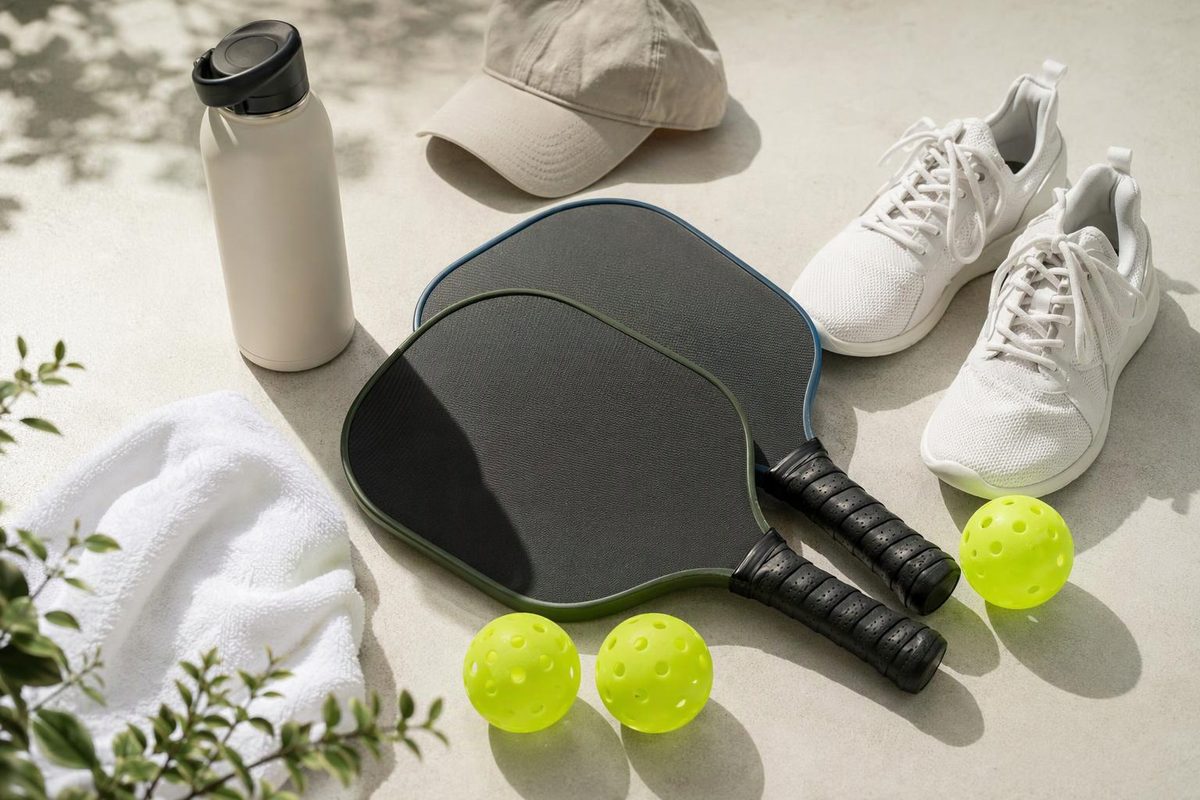
If a junior pickleball player looks steady in practice but erratic in games, start by finding when the misses appear, not by rebuilding every stroke. Compare easy feeds, balls that require movement, and live points. Then work on one repeatable habit.
The aim is not to eliminate every mistake. It is to identify a recurring problem and give the player a manageable way to address it.
Check the opening-shot sequence first
A player who rushes forward after serving may seem inconsistent when the real problem is positioning. The serve must bounce on the receiving side, and the return must bounce on the serving side. Moving forward is not itself a fault, but volleying that return is. The serving team should stay back to allow the return bounce before working forward. USA Pickleball’s positioning guidance explains how this two-bounce rule shapes the opening shots.
If that is where points keep ending, rehearse serve–return–bounce before changing the swing. Our two-bounce rule guide walks through the sequence.
Find the pattern, not just the miss
Watch a short stretch of play together. Record the shot, the outcome—net, long, wide, or in—and what happened immediately before contact. Avoid labels such as “careless” or “bad backhand.”
Use these observations to choose what to test first:
| What you observe | What to test |
|---|---|
| Comfortable feeds go in, but moving balls do not | Can the player move into position rather than reach, then recover for the next shot? |
| Soft shots alternate between controlled dinks and high pop-ups | Does the backswing grow, or does the player add a wrist flick? |
| The player hits while still rushing toward the net | Can they stop in a balanced ready position before the opponent hits? |
| Cooperative rallies are steady, but points end with attempted winners | Can they keep a low ball soft and use a larger target instead? |
These are starting points, not proof of a cause. A wide miss alone does not tell you whether the problem was footwork, contact, or shot selection.
The technical cues are deliberately simple: USA Pickleball recommends moving the feet rather than reaching, contacting the ball in front, and using a gentle lifting motion with minimal backswing for dinks. It also advises stopping in ready position if a player cannot reach the Kitchen line before the opponent’s next shot. See its basic stroke guidance.
Run a one-cue practice test
Choose the shot that keeps breaking down. A dink—a soft shot hit after a bounce and intended to land in the opponent’s Kitchen—is a useful example. Use an adult or practice partner who can send manageable balls, and agree on one cue, such as “contact in front” or “short swing.”
1. Establish an easy baseline
Stand near opposite Kitchen lines. The partner sends gentle, predictable balls to the same side. Let each ball bounce, then dink it back into a generous central area of the opposite Kitchen.
Count how many of 10 attempts land in the target. Also note whether the chosen habit appears. Do not add three more corrections after a miss.
Checkpoint: Can the player repeat the habit under comfortable conditions? If not, make the feed easier before adding movement.
2. Add one movement demand
Repeat 10 attempts, alternating feeds slightly left and right within comfortable reach. Keep the pace and target similar. Ask the player to move their feet into position and recover after each shot.
Checkpoint: Does control fall off when movement begins? If so, keep working at this stage rather than making the feeds faster. If it stays steady, vary the placement a little more.
3. Carry the habit into live play
Play short dink-only points with the same partner, letting each ball bounce before hitting it. Keep the chosen cue, but now let each player choose placement. Record the same outcomes and observe whether the habit survives the uncertainty of a rally.
If it does, try ordinary points next. If it disappears, return briefly to the movement stage, then retry live play.
This is a practice test, not an age-based assessment. Ten attempts provide a manageable snapshot, not a junior skill rating. Botetourt Parks & Recreation’s coaching plan for ages 13+ likewise emphasizes adapting difficulty to ability and progressing from control drills to game-like situations.
Keep the adult feedback useful
Let the junior help choose the cue. Between rounds, ask, “Which balls felt hardest?” Praise something observable: “You moved before that backhand,” rather than only celebrating winners.
Positive Coaching Alliance recommends praising controllable actions and comparing progress with the athlete’s own past performance, rather than with teammates.
At the next practice, repeat the same test with a similar feed pace and target before changing the goal. Look for fewer recurring misses and a habit that carries into live points—not simply one higher count on easy feeds.