
Is the Junior Missing Shots—or Is the Partnership Missing Decisions?
Troubleshoot junior doubles inconsistency by separating shot misses from shared-ball confusion, uneven movement and partner takeover.
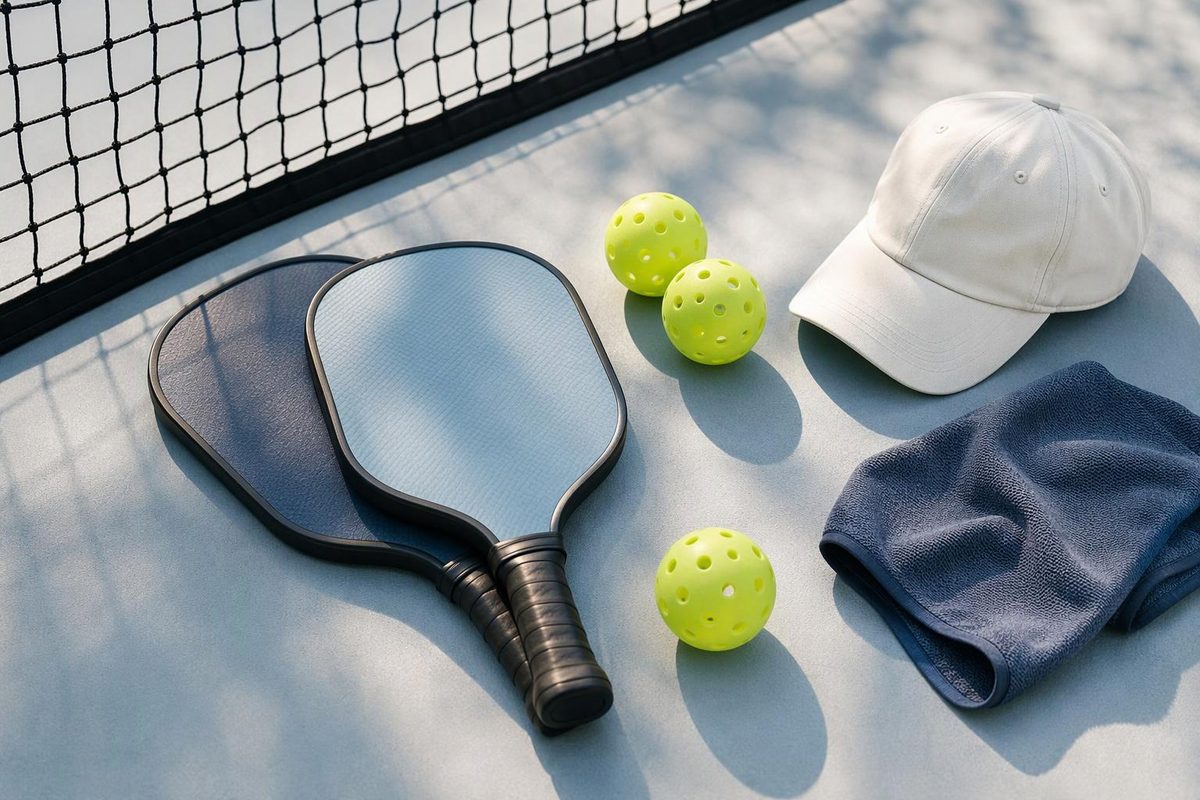
When a junior hits comfortably with one partner but struggles with another, check what happens between the players before changing the junior’s stroke. A missed ball may follow a late call, two competing swings, or a partner moving away from the play.
The useful question is not “Who is the inconsistent player?” It is “Did this ball have a clear hitter and a partner ready to cover the next reply?”
First, separate a starting position from a movement mistake
“Move together” does not mean both partners must always stand at the same depth. On the receiving team, the returner starts behind the baseline while the non-receiving partner can start just behind the Kitchen—the non-volley zone—line. On the serving team, both should stay back to allow the return to bounce. The serve and return each require a bounce, as USA Pickleball’s positioning guidance explains.
These starting positions are tactics, not mandatory locations. Moving forward after serving is not itself a fault; volleying the return—hitting it before it bounces—is.
So do not count the receiving team’s initial one-up, one-back position as poor teamwork. Watch what happens after the return—and whether the serving partners advance as their shot allows.
Sort the breakdown before choosing a fix
Watch a short stretch of doubles. Record the situation before contact, not just “net” or “out.” Use these categories as observations to test, not diagnoses:
| What you see | What to check next |
|---|---|
| The junior has an uncontested ball and misses it | Does the same shot fail with predictable feeds? If so, work on the individual skill. |
| Both players reach, or both leave the middle ball | Did they agree who would take it? Was the call early enough to act on? |
| The junior stops preparing when the partner moves toward the ball | Is the partner claiming it clearly, or sending mixed signals? |
| One player moves wide and the next reply goes through the gap | Did the non-hitter shift to cover the space between them? |
| The stronger partner repeatedly takes balls the junior is ready to hit | Does the junior actually get a chance to practice the agreed role? |
If uncontested shots are the recurring problem, use the individual junior consistency guide. If uncertainty appears mainly when partners share space, test a team agreement first.
Give both players a job—not just the stronger player
Before the next practice round, have the pair answer three questions:
- Who takes this shared ball? Choose a specific confusing situation, such as a gentle ball between them at the Kitchen line. Agree on a default hitter for that situation and use “mine” or “yours” early.
- What does the non-hitter do? Leave room for the swing, keep the paddle ready and adjust to cover the next reply. Not hitting is still an active role.
- What happens after confusion? Between rallies, say what occurred: “We both started,” or “Neither of us called.” Then restate the agreement.
The default is a practice aid, not permanent ownership of the middle. Change it if it repeatedly asks one player to stretch while the other is balanced and ready.
The Pickleball Guru’s communication guidance recommends discussing what each partner is working on and keeping body movements consistent with verbal calls. A partner who says “yours” while continuing to crowd the swing has not made the decision clear.
For movement, use the observable cue “follow the ball, then get balanced before the opponent hits.” Staying linked and resetting balance are central to USA Pickleball’s positioning advice.
Run a partnership check without rescuing every ball
Use four players, with opponents able to keep the pace manageable. Choose just one breakdown from the table. A non-playing observer can record it; otherwise, have the pair tally it between rallies.
Round one: Play eight ordinary practice rallies. Record each occurrence of the chosen situation, whether there was one clear hitter, and whether the non-hitter stayed ready. Record the shot outcome separately. If the situation never appears, use gentle feeds to recreate it.
Round two: Repeat with similar opponents and pace after agreeing on one adjustment. For example: “Call early enough that your partner can leave room for the swing.” An adult or stronger partner should honor that agreement rather than taking over every difficult-looking ball.
Checkpoint: Did clear ownership and useful partner coverage become more repeatable? A clearly assigned shot that goes into the net is different from a ball lost because nobody knew whose it was. Conversely, a winner after both players reach for the same ball does not show that the coordination problem is fixed.
If the agreement works, carry it into a short scored game. If it breaks down, ask both players what they thought would happen. Simplify the situation before adding another instruction. These counts are practice snapshots, not junior rating standards.
Keep the junior involved in the repair
Ask each player, “What would help you know when to take the ball?” Do not assume the quieter player wants the partner to cover more court.
Praise a specific team action: “You called early and your partner stayed ready.” Positive Coaching Alliance recommends truthful, specific encouragement, listening to teammates and taking responsibility rather than assigning blame.
When partners change, repeat the brief agreement. Judge whether the junior can understand and carry out the shared plan—not simply whether one pairing wins more rallies.