
Your Paddle May Stay Legal Without Taking the New Test
An exact version already approved generally avoids retroactive testing unless resubmitted; only the official procedure confirms the 2,100 RPM result.
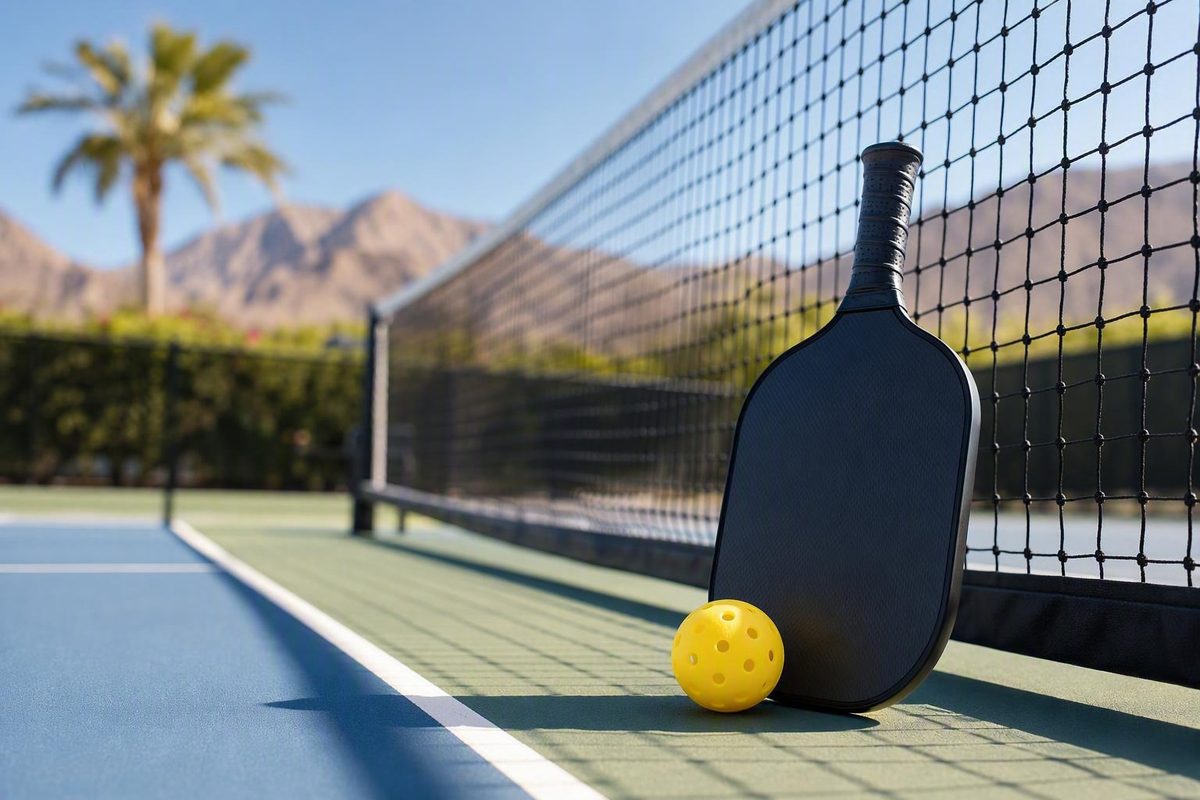
No one can confirm whether an unidentified paddle will physically pass USA Pickleball’s new spin test. That requires the exact paddle version and a measurement under the official procedure. But if your exact version was approved before the new standard begins and remains listed, it generally will not require retroactive testing unless it is resubmitted.
The short answer: passing and staying legal are different questions
“Will my paddle pass the new spin test?” can mean three different things:
- Would it physically pass? USA Pickleball has announced a 2,100 RPM ceiling for the new test. For a result at or near that number, the official procedure’s boundary, rounding, and tolerance rules control.
- Does the exact version remain approved? A paddle approved under the earlier standard may remain listed without taking the new spin test.
- Can you use it in your event? The answer depends on the event’s governing body, required equipment list, and inspection or testing procedures.
USA Pickleball says paddles already on its Approved Paddle List generally will not require retesting unless they are resubmitted. The new spin-rate requirement applies to submissions beginning October 1, 2026. USA Pickleball’s implementation notice explains the ceiling, effective date, and treatment of existing approvals.
These answers can differ. An older paddle may remain approved under the standard that applied when it was certified even though it has never taken the new test. That continued approval establishes listing status—not that the paddle physically produces spin at or below the new ceiling.
What changes on October 1, 2026
The transition works like this:
- Through September 30, 2026: Submitted paddles may continue to qualify under the existing surface-roughness and coefficient-of-friction requirements.
- Beginning October 1, 2026: Newly submitted paddles must meet the output-based spin standard, for which USA Pickleball has announced a ceiling of 2,100 RPM. The official procedure controls how results at or near the ceiling are treated.
Those dates and requirements come from USA Pickleball’s implementation notice cited above.
The earlier approach examined properties of the paddle face as indicators of spin potential. The new test measures the result: the spin the paddle imparts to a ball under controlled conditions.
USA Pickleball says the test uses two cameras and automated calculation technology developed with Image Systems to reduce operator variability. Separately, the test procedure was scheduled for distribution to manufacturers on July 15, 2026, ahead of the mandatory October launch, according to The Dink’s rollout report.
That report also discusses a review of surface-roughness measurements. Those findings should not be used to predict how many paddles will fail the spin test. Surface properties and measured ball-spin output are related, but they are not interchangeable results.
Use this decision table to classify your paddle
Purchase date is not the deciding fact. What matters is the certification or submission status of the exact paddle version, whether it remains listed, and which rules your event uses.
| Situation | Physical spin-test status | Likely USA Pickleball status | Next action |
|---|---|---|---|
| Exact version approved before October 1, 2026, and still listed | Unknown unless tested under the official procedure | Generally no retroactive test unless resubmitted | Confirm the listing and event rules |
| New or revised version submitted beginning October 1, 2026 | Must meet the announced 2,100 RPM ceiling under the official procedure | Must satisfy the new certification requirements | Find the exact version in the current database |
| Older approved version is resubmitted | May have to undergo the new test | Effect on an earlier approval should not be assumed | Check current governing-body guidance and the database |
| Model, thickness, or revision cannot be matched | Unverified | Do not assume a similar listing covers it | Contact the manufacturer or event organizer |
The dates, ceiling, and general rule for existing approvals are set out in USA Pickleball’s implementation notice cited earlier.
A shared product name is not enough. Thicknesses such as 14 mm and 16 mm may have separate approval records.
Buying an older model after October 1, 2026 does not automatically put it under the new test. If that exact version was approved earlier and remains listed, its earlier certification status may still apply. Conversely, buying a revised paddle before October 1 does not establish grandfathering if that revision was not the version previously approved.
How to check your exact paddle before you play
Use this lookup process instead of relying only on an approval logo or retailer description:
- Identify the paddle completely. Record the brand, full model name, generation or revision, thickness, model number, and approval markings.
- Identify the event’s governing body. Ask which equipment approval system applies.
- Search the official database. For USA Pickleball-sanctioned competition, use the USA Pickleball Approved Equipment database.
- Match every identifying detail. A listing for another thickness, generation, or same-name revision may not cover your paddle.
- Check again shortly before play. Approval records and event policies can change.
If you cannot make an exact match, treat the paddle’s status as unverified. Send the manufacturer photographs of the face markings, edge guard, model label, and any serial or generation information. You can also send those details to the organizer and request a written answer.
A matching database record confirms the approval status of that model or variant. It does not provide a current spin measurement for the individual used paddle in your bag.
Event rules still control entry. A local club, independent tournament, USA Pickleball-sanctioned event, and professional tour may use different approval systems or procedures.
Why a home spin test cannot give you the official answer
The available evidence provides no reliable at-home procedure for reproducing the official pass-or-fail result. Touching the face, inspecting visible grit, or hitting a few topspin drives cannot establish an official RPM measurement.
The same principle applies to feel:
- More perceived spin does not prove failure.
- A rough face does not prove failure.
- A smooth face does not prove compliance.
- Extra pop or power does not establish a spin violation.
- A surprising ball reaction is not a controlled measurement.
The official procedure controls contact and measurement, then uses a dual-camera system to calculate the resulting ball spin.
For the same reason, a reviewer’s RPM figure should not be placed beside the official ceiling as if both came from the same test. Reviewer arm-swing measurements and the controlled official procedure are different measurements and should not be directly compared.
It cannot certify that a paddle passes USA Pickleball’s procedure. Only testing under the official spin-rate procedure can establish the official physical result. Event testing does so only if the organizer confirms that it uses the applicable authorized method and threshold.
Pre-tournament check for a used paddle
Model approval and paddle condition are separate issues. The database covers an approved model or variant; a referee or testing station evaluates the paddle you actually bring.
Before leaving for a tournament, inspect both faces and the edge for:
- Cracks or holes
- Delamination or separation
- Indentations that break or deform the surface
- Abnormal roughness
- Added texture or other surface alterations
- Loose sections or visible core damage
- Objects or features that could affect spin
Tournament guidance describes referee checks for approval markings, damage, delamination, abnormal texture, and prohibited features. An individual paddle can therefore be rejected even when its model appears on the approved list, as explained in Pickleball Magazine’s overview of tournament paddle inspections.
A noticeable change in sound, feel, pop, power, or ball response is a reason to investigate. It is not proof that the paddle violates the spin ceiling or another equipment limit.
Before competition, ask whether paddles will be inspected or tested on site and what happens if one is rejected. Bring a second paddle whose exact version is currently approved.
Does buying my paddle before October 1, 2026 mean it is grandfathered?
No. Purchase date alone does not determine which certification standard applies.
The relevant issue is when the exact version was certified or submitted. A paddle bought before October 1 could be an unapproved revision; one bought later could be old inventory from a previously approved version. Under USA Pickleball’s announced policy, paddles already on the Approved Paddle List generally do not require retroactive testing unless resubmitted.
Does a USA Pickleball approval mean my paddle is legal for PPA or MLP play?
Not automatically. USA Pickleball and UPA-A operate separate approval systems. Secondary reporting states that USA Pickleball-sanctioned amateur events use the USA Pickleball list, while PPA and MLP professional competition require UPA-A certification.
Because event requirements can change, do not assume that one organization’s mark satisfies another. Ask the organizer which current list applies, then check your exact paddle variant.
What information is needed to check my specific paddle?
You need enough information to match the exact database record: brand, full model name, thickness, generation or revision, model number, and approval markings. You also need to know which governing body or equipment list your event follows.
The practical answer is three steps: identify the exact paddle version, check it on the current list required by your event, and distinguish continued approval from an actual result under the new test. If it was already approved before October 1, 2026, it generally will not need retroactive testing unless resubmitted. Only testing under the official procedure can show whether it physically meets the announced 2,100 RPM ceiling.