
Pickleball Serve Rules for 2025: What Changed and What Stayed
Check the 2025 pickleball serve rules for volley and drop serves, foot placement, ball release, replay calls and the new verbal “wait” provision.
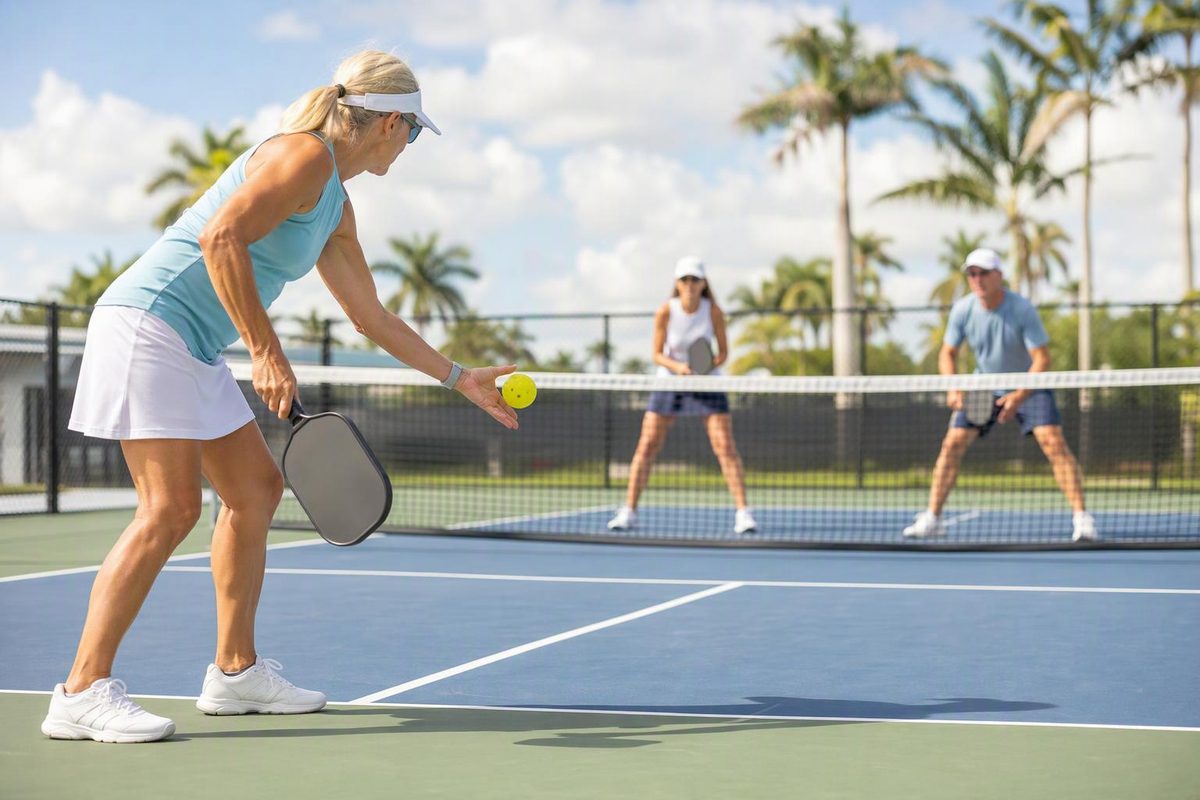
The 2025 USA Pickleball rules allowed both volley serves and drop serves. The notable serving updates covered ball release, foot placement and verbal requests to stop before the serve—not a replacement of the basic serve motions.
This is a guide to the 2025 ruleset, using USA Pickleball’s change records and its 2025 Official Rulebook, Global Pickleball Federation edition. For present-day instruction, use our current serving guide.
What changed for serving in 2025?
You could release the ball with one hand or the paddle
Rule 4.A.5 broadened the release wording to allow one hand or the paddle. Previously, paddle release for a volley serve was an exception for a player with the use of only one hand.
You still could not deliberately add spin or manipulate the ball during release with your body or paddle. Natural rotation was acceptable, including letting the ball roll off the paddle face by gravity. Spin produced by striking the serve was not the prohibited release spin. USA Pickleball’s approved 2025 release change
For a simple drop serve, let the ball fall from your hand or paddle face. Do not throw it upward or push it downward to create a different bounce.
Foot placement closed a corner loophole
Rule 4.A.4.c changed to say that neither foot could touch the playing surface outside the serving area. The change addressed a stance with one foot behind the baseline and the other outside the sideline but forward of the baseline. USA Pickleball’s approved foot-position change
For standing players, check these three things at paddle contact:
- At least one foot is touching the ground behind the baseline.
- Neither foot touches the baseline or the court inside it.
- Neither foot touches the ground outside the serving area.
The serving area is behind the baseline, on and between the imaginary extensions of the centerline and the relevant sideline. These limits applied to both serve types. 2025 rulebook, Rules 3.A.40 and 4.A.4
Saying “wait” before the serve was recognized
The 2025 wording recognized verbal indicators such as “stop” and “wait” after the score call had started. Ordinary nonverbal “not ready” signals were still ignored at that stage unless there was a hinder—interference with play.
In doubles, if you realized you were incorrectly positioned after the score call but before contact, say “wait” rather than relying on a raised hand. Stop, sort out positions and recall the score before serving. This was not permission to stop an underway rally without a valid reason. USA Pickleball’s approved readiness change and examples
The two legal serve motions in 2025
| Serve type | Requirements |
|---|---|
| Volley serve: strike before the ball bounces | At contact, the arm moves in an upward arc; the highest point of the paddle head is not above the highest part of the wrist; contact is not above the waist. Forehand or backhand is allowed. |
| Drop serve: strike after the ball bounces | Release from one hand or the paddle face at a natural, unaided height. Do not propel the ball in any direction. The volley serve’s three motion restrictions do not apply. |
A drop serve could bounce more than once, and its bounce did not have to occur behind the baseline. Your feet, however, still had to satisfy the serving-area rules at contact. 2025 rulebook, Rules 4.A.7–4.A.8
Placement, timing and disputed serves
Serve into the service court diagonally opposite your correct position. The ball must clear the Kitchen—the non-volley zone—and its lines. The receiving court’s centerline, sideline and baseline count as in; the Kitchen line does not. A ball that touches the net and then lands legally remains in play—there is no automatic net-touch redo. 2025 rulebook, Rules 4.A.2 and 6.A
Finish the entire score call before contact, then serve within 10 seconds. In standard doubles scoring, call your team’s score, the opponents’ score and server number; the opening call is 0-0-2. The 2025 provisional rally-scoring option instead used a two-number call and one server per team turn. 2025 rulebook, Rules 4.A.1, 4.B.6, 4.E and 4.J
In play without a referee, the receiver could call for a replay before returning the serve for prohibited release spin or a release they could not see. They could not enforce a fault or demand a replay for service-motion violations, such as suspected above-waist contact. Players were still expected to call faults on themselves or their partner. Opponents could call service foot faults as soon as detected; disagreement between teams about that call required a replay. 2025 rulebook, Rules 4.A.9 and 13.D.1
For a quick partner check, serve five balls from each side. Have your partner watch your feet and release, then aim comfortably beyond the Kitchen line. After each legal serve, have your partner return it after the bounce, then let that return bounce before your next shot. Both bounces were required under 2025 Rule 7.A; see our two-bounce rule guide for the full explanation.