
Can You Serve Overhand in Pickleball? The Drop-Serve Exception
A tennis-style overhead serve is illegal under USA Pickleball rules. Learn the volley-serve limits, drop-serve exception and overhead rally rules.
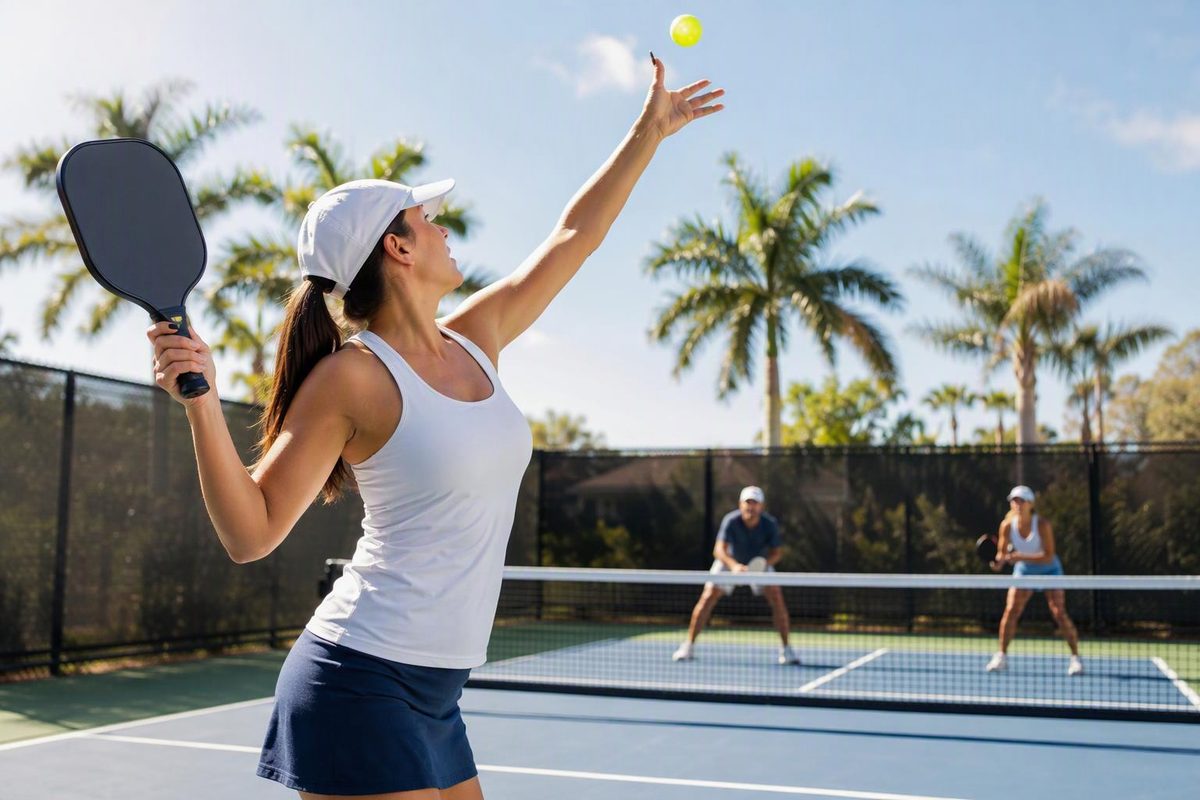
No—not a tennis-style serve where you toss the ball up and strike it overhead before it bounces. Under the 2026 USA Pickleball rules, that is an illegal volley serve. A drop serve has different swing rules, so “all overhand serving motions are illegal” is too broad. Which swing restrictions apply depends on whether the ball bounced before you hit it. 2026 Official Rulebook, Sections 7.C–7.D
Why a tennis-style overhead serve is illegal
A volley serve means striking the released ball before it bounces. At contact, all three requirements apply:
- Your paddle must be moving in a clear upward arc.
- The highest point of the paddle head must clearly not be above the highest part of your wrist joint.
- The ball must clearly be no higher than your waist.
An overhead strike above your head fails the waist-height requirement. Violating any one of these three rules is a service fault. Forehand and backhand serves are both allowed, but neither gets an exemption from this checklist. Rules 7.C.1–7.C.5
Watch the moment of contact, not the finish. A paddle that finishes above your shoulder does not, by itself, make the serve illegal. A legal low-to-high swing can have a high follow-through.
Does a drop serve allow an overhand swing?
The drop serve does not have the volley serve’s upward-arc, paddle-head or waist-height restrictions. USA Pickleball explicitly confirms that those three limits do not apply to a drop serve. An overhand-looking swing after a legal drop and bounce is therefore not automatically illegal. Official rules summary
You still cannot toss the ball or drive it downward to create a higher bounce:
- Release the ball from a natural, unaided height.
- Let gravity drop it; do not throw it downward, toss it upward or propel it sideways.
- Strike it only after it bounces on the playing surface.
The release must also be visible to the receiver, and you cannot deliberately add spin during release. Your feet and target still matter: at contact, keep at least one foot grounded behind the baseline, between the imaginary extensions of the centerline and sideline. Neither foot may touch the court, including the baseline, or the ground outside that serving area. Serve into the diagonally opposite service court, beyond the Kitchen and its line. Sections 7.A–7.E and Rule 8.C
For a beginner, use a comfortable forehand or backhand after the bounce rather than trying to manufacture an overhead contact. The full serving guide covers setup and placement.
An overhead rally shot is different
You can hit an overhead smash during a rally. The serving-motion restrictions do not apply to that shot. However, the serve and return must each bounce before being returned, and an overhead volley must obey the Kitchen rule—including momentum that carries you into the Kitchen afterward. Rules 10.A and 11.A
A quick practice check: Stand behind the baseline and have a partner film five volley serves from the side. Pause each video at contact to check ball height and paddle-head position, then watch the frames around contact to check upward movement. Ignore how high the follow-through finishes. If you prefer the drop serve, have your partner check that the release is a free drop—not a downward push.