
The 3rd Shot in Pickleball: Drop, Drive, Then Move
Learn what the third shot is, why it must bounce, how to choose a drop or drive, where to move afterward, and a practical partner drill.
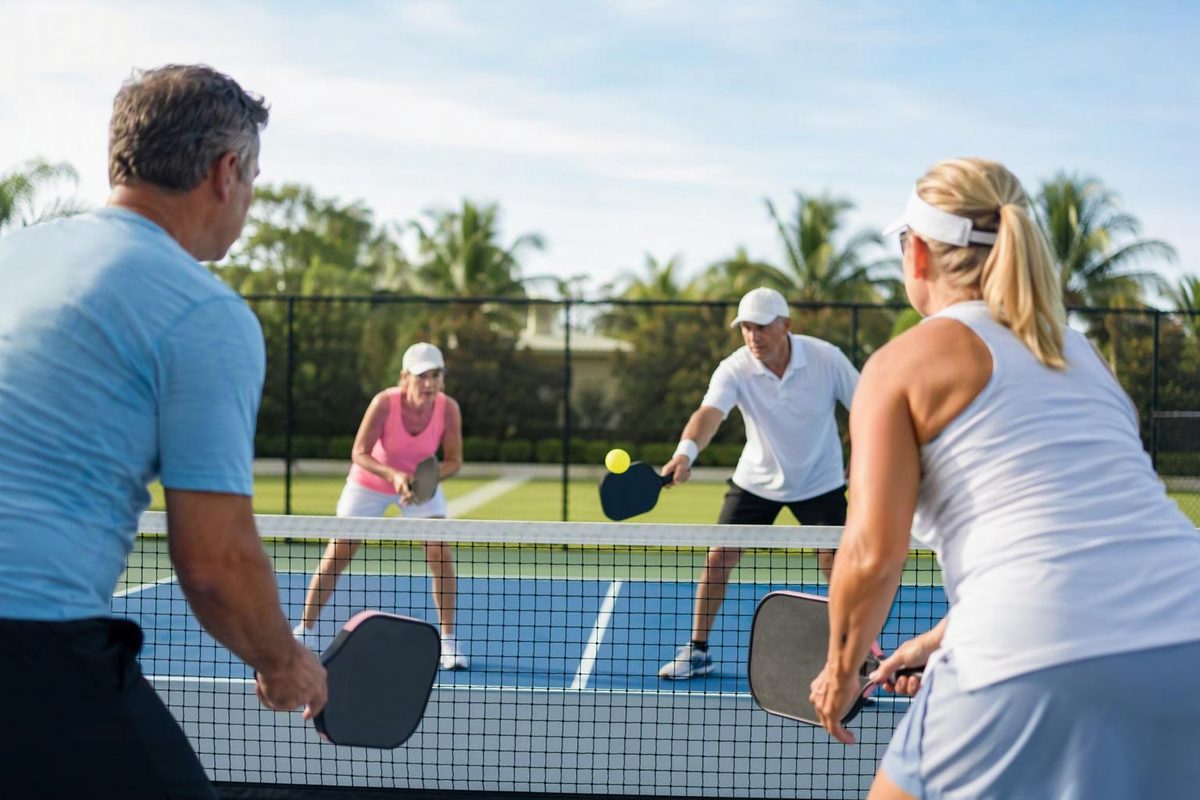
The third shot in pickleball is the serving team’s first shot after the return of serve:
- Serve
- Return
- Serving team’s next shot
It is often called the third-shot drop, but the third shot does not have to be a drop. Because the return must bounce, it is played as a groundstroke; the usual choices include a drop or drive, with a lob used less often. In recreational doubles, the useful decision is normally between a controlled drop and a drive.
The rule behind the third shot
The third shot must be played after the ball bounces. Under the two-bounce rule, the receiving team must let the serve bounce, and the serving team must let the return bounce. Only after those two required bounces may either team volley. This requirement appears in the 2026 USA Pickleball Official Rulebook and its beginner rules summary.
If you are on the serving team, begin at or behind the baseline rather than rushing forward for a volley. Read the return, move to its bounce and let it hit the court before you play it. For a fuller explanation of the required bounce on each side, see the double-bounce rule in pickleball.
The strategic problem is simple: the return team can move toward the Kitchen line while its return travels. Your team often contacts the third shot from deeper in the court. The shot should help reduce that positional disadvantage—not necessarily win the rally immediately.
Drop or drive? Read the return first
Choose a drop for a low or deep return
A third-shot drop is a soft groundstroke intended to descend into the opponents’ Kitchen. It gives your team a chance to move forward because opponents contacting a low ball generally have fewer aggressive options.
Choose it when:
- the return keeps you near or behind the baseline;
- the ball stays low after its bounce;
- you are balanced and can control a soft shot; or
- the opponents are established at the Kitchen line and waiting for pace.
USA Pickleball describes the drop as a controlled shot that connects baseline play to movement toward the Kitchen. Its technique guidance emphasizes a compact swing, paddle in front and relaxed grip (USA Pickleball).
Use a gentle lifting motion rather than chopping down or trying to add heavy spin. Give the ball enough height to clear the net, but make it descend before an opponent can attack it above net height. The middle is a practical first target because it provides court margin and can narrow the opponents’ angles.
A good drop does not have to bounce. Opponents may legally volley it because the two required bounces have already occurred. Judge the shot by the contact you create: a low, reaching volley can still let you advance. If your pickleball drops keep getting volleyed, first ask whether the reply is actually attackable.
Choose a drive when the return sits up
A third-shot drive is a firm groundstroke intended to pressure the opponents or produce a weaker next ball. It is often a setup shot, not an all-or-nothing winner.
Drive when:
- the return is short and bounces comfortably high;
- you can contact it in front while balanced;
- your final step moves into the ball; and
- you have a clear target rather than merely swinging hard.
USA Pickleball’s third-shot guidance favors a drive on a short, high return and a drop on a low or deep one. It also presents the drive as a possible setup for an easier fifth-shot drop (USA Pickleball). Its drive lesson recommends driving a return that peaks above the knees when the player can step forward into it (USA Pickleball). Treat that as a coaching cue, not a rule: your balance and control still matter.
Aim through the middle or toward an opponent’s backhand. Use a compact backswing and enough net clearance to keep the ball in play. Maximum speed is rarely necessary.
Move according to the shot you hit
Do not sprint to the Kitchen automatically. Watch the ball you produced.
- Low drop: Both partners advance together while the ball travels. Split-step as the opponent begins the forward swing, then prepare for the next ball.
- High drop: Stop before the opponent contacts it. Get balanced, keep the paddle ready and defend the likely attack.
- Drive that produces a soft block: Move in and play the next ball—often a fifth-shot drop—from closer range.
- Drive met by a firm counter: Hold your position or stop in the transition area rather than running into the reply.
Use partner spacing as a checkpoint: move as a pair and keep roughly the same distance from the net. If one player charges while the other stays back, opponents gain a large gap to target.
Practice the decision, not just one shot
Use one feeder, one hitter and two large targets.
- The feeder stands near the Kitchen line and sends ten feeds that simulate returns: some deep and low, others shorter and higher.
- Agree on the cue before starting: call “drop” for a deep or low feed and “drive” for a short ball that bounces high enough to attack while balanced.
- The hitter starts behind the baseline, moves to the ball and calls the choice before the bounce.
- For a drop, aim into either half of the Kitchen. For a drive, aim through the middle third of the court.
- After contact, the hitter advances only when the shot or the feeder’s reply stays low enough to limit an attack.
- The feeder blocks the ball back so the hitter must stop, balance and play one more controlled shot.
Award one point for following the agreed decision cue and one for usable execution. Count a drop as usable when the feeder contacts it low or after a bounce. Count a drive when it stays in and makes the feeder block or contact from below net height rather than hit down aggressively. Play to 15, then switch roles.
The best third shot is not always the softest or hardest one. It is the shot that fits the return and helps both partners reach a stronger, balanced position.