
How to Hit a Controlled Backhand Volley
Learn the backhand volley with clear grip, elbow and contact cues, fixes for pop-ups and late hits, and a simple partner drill.
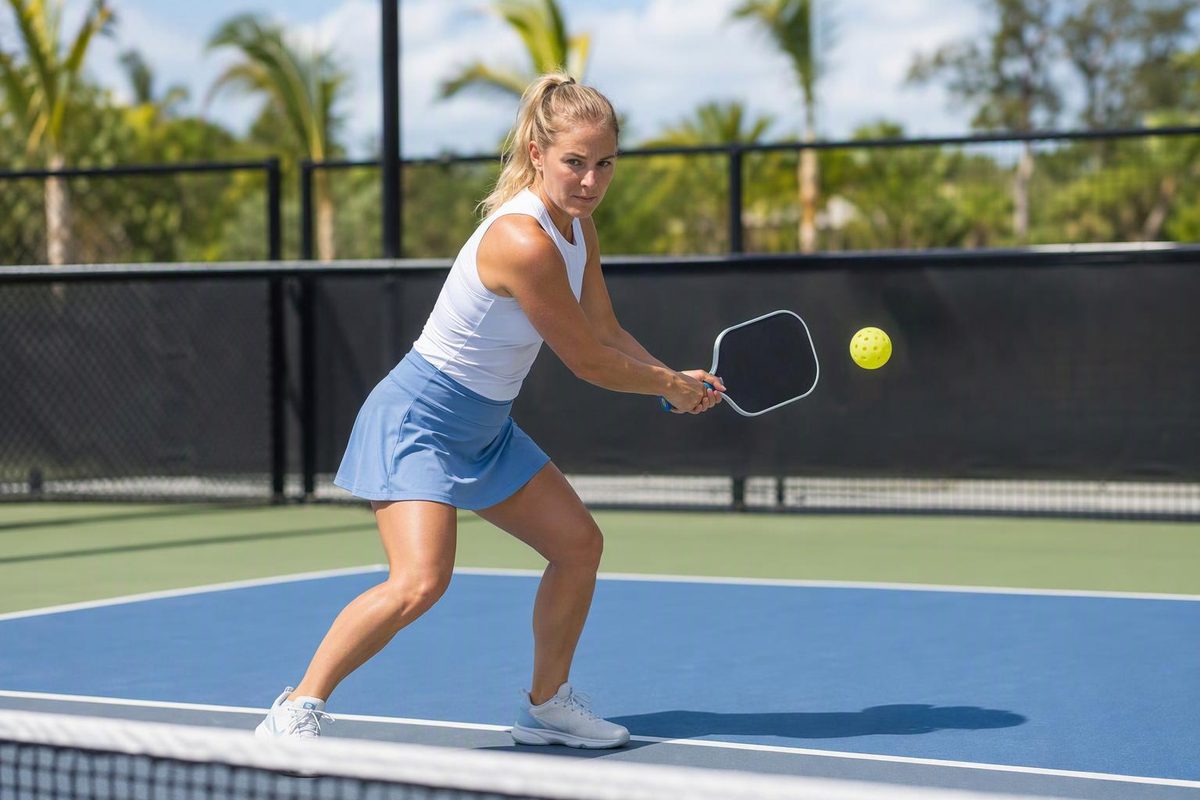
A backhand volley is a backhand shot hit before the ball bounces. At the Kitchen line, use a short forward motion rather than a groundstroke swing: present the paddle face, meet the ball in front, and recover for the next shot.
First, make it legal. The serve and return must each bounce before being returned. When you volley, you cannot touch the Kitchen—including its line—or let your volley momentum carry you into it. Reaching your paddle over your Kitchen is allowed; losing your balance into it is not. See Sections 3, 10 and 11 of the 2026 USA Pickleball Rulebook, GPF edition, and the Kitchen rule explained for tricky situations.
Set up the backhand face, then move forward
Start with this one-handed version at a comfortable practice pace.
- Use a Continental grip. This grip lets you present either a forehand or backhand face without changing grips during a quick exchange. Start facing the net with feet slightly wider than shoulder width and the paddle in front—not down beside your leg. These are PrimeTime Pickleball’s volley setup cues. If you need help finding the grip, follow the paddle-grip setup.
- Present the backhand face early. For a right-hander, bring the paddle toward the left side or across the front of your body; reverse that for a left-hander. Think knuckles toward the ball, rather than palm toward the ball. A backhand can also cover many balls coming straight at your torso—you do not need to force a forehand there. PrimeTime Pickleball’s backhand guidance uses this knuckles-first cue.
- Keep the elbow bent and comfortably close. On a routine ball within reach, stay mostly facing the net. Do not pull the paddle behind you or turn sideways as though preparing a backhand drive. Coaching from Cori Elliott emphasizes a balanced, square stance and compact forward punch, without letting the elbow drift outward.
- Meet the ball in front with a stable wrist. For a basic punch, set the paddle face roughly parallel to the net, slightly open—tilted a little upward—as described by PrimeTime Pickleball. Extend forward a short distance through contact. Do not flick the wrist to create power: think of the forearm and paddle moving together. Keep the finish short enough to return promptly to ready position. Elliott’s central cue is a stable paddle face with no wrist flipping.
Checkpoint: After contact, you should still be balanced outside the Kitchen, with the paddle available for another ball—not trailing behind you or finishing down by your hip.
Match the motion to the incoming ball
A backhand volley does not have to be an attack.
- Fast ball, little time: Shorten the motion toward a block. You do not need to add a big swing to incoming pace.
- Comfortable contact above net height: Use a compact, firmer punch toward an opponent’s feet or an open part of the court.
- Contact below net height: Soften the shot and give it enough lift to clear the net. Trying to hammer a low ball requires hitting upward and can give the opponents an easy attack.
PrimeTime Pickleball’s useful starting rule is to volley softly from low contact and more firmly from high contact. In recreational doubles, keeping a low backhand volley difficult to attack is often more useful than trying to win immediately.
Fix one miss at a time
The ball pops up: Check whether the paddle face opens during contact. Stabilize the wrist and reduce the forward motion before adding pace.
You feel jammed: Check whether you started with the paddle beside your body or took it backward. Present the backhand face sooner and meet the next feed in front.
You fall into the Kitchen: Reduce the reach and forward lunge. Do not step toward every volley as a default; Elliott’s backhand-volley coaching emphasizes establishing a stable base. That does not mean keeping your feet fixed when the ball is out of reach: reposition when needed, then aim to be balanced at contact.
A simple partner drill
Stand opposite a partner, both outside your Kitchen lines. Have your partner feed gentle balls to your backhand, one at a time.
Return 10 controlled volleys toward the feeder, resetting the paddle after each. Ask your partner to watch one cue: does the paddle move forward through contact, or swing across your body?
Then alternate two feeds: a comfortable ball above net height for a short, controlled punch back toward the feeder, and a lower ball for a soft return into their Kitchen. Switch roles. Increase pace only when you can keep the wrist stable and finish balanced. The goal is repeatable backhand contact—not winning the practice exchange.