
Four Pickleball Drills for Soft Shots and Better Positioning
Use this 30-minute partner practice to work on dinks, drops, resets and the first four shots, with clear setups and checkpoints.
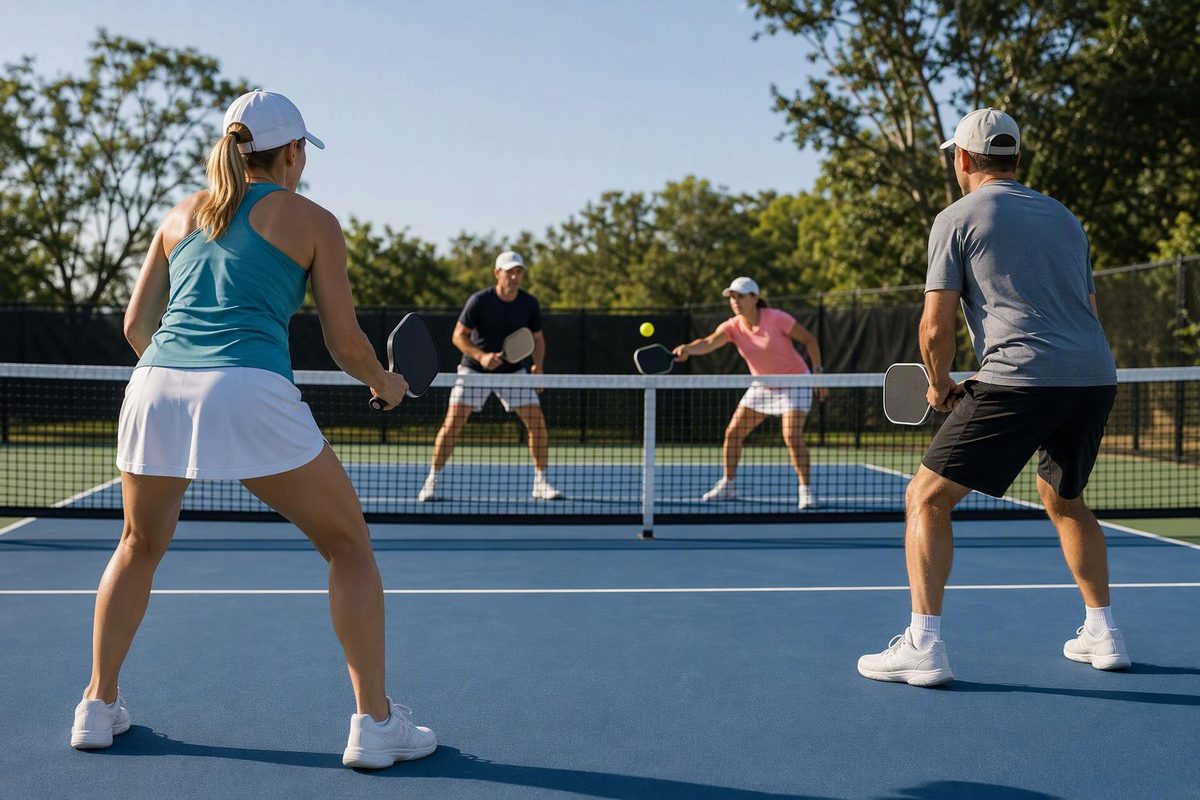
You can step into the Kitchen to play a ball that has bounced. The restriction is on volleying—hitting the ball before it bounces. You must initiate a volley outside the Kitchen, including its boundary lines, and neither you nor anything touching you may contact it during the volley. Your volley momentum cannot carry you into it. After touching the Kitchen, both feet must contact the surface completely outside it before you volley again. See Section 11 of the 2026 USA Pickleball rulebook.
That matters in practice: don’t stay planted behind the line and stretch for every short dink. Step in when needed, hit after the bounce, then recover to a ready position. See the Kitchen rule explained if those situations still cause confusion.
This partner session connects soft shots to moving forward in a doubles point. You need two paddles, a few balls and a court. Keep spare balls outside the playing area.
| Time | Practice |
|---|---|
| 3 minutes | Easy movement and gentle hitting |
| 6 minutes | Dink control |
| 7 minutes | Drops from increasing distance |
| 6 minutes | Midcourt resets |
| 8 minutes | Serve, return, third shot and recovery |
Start cooperatively. The counts below are practice targets, not skill-rating standards. If you cannot sustain the exercise, shorten the distance or make the feed easier before adding pace.
1. Dink control: move, hit, recover
Setup: Face your partner across the net on one half of the court, both just behind the Kitchen line. A dink is a soft shot intended to bounce in the opponent’s Kitchen.
Action: Rally gently, letting each ball bounce for this exercise. Aim into a broad area of the Kitchen rather than close to a sideline. Use a short swing, contact the ball in front of you and return your paddle to a ready position.
Spend three minutes hitting straight ahead. Then use the other three minutes for crosscourt dinks, switching diagonals halfway through. Selkirk’s partner-drill routine uses straight-ahead and crosscourt dinking without attacks to build cooperative rallies.
Checkpoint: Can you complete 10 consecutive shots that bounce in the Kitchen without either player losing balance? Count both players’ shots, and restart after a miss.
Adjust: If the rally breaks down, return to comfortable feeds. Once it is steady, move your partner a step to either side—not so far that the drill becomes a chase. Look for controlled recovery after each shot, not just a longer rally.
2. Drop ladder: add distance gradually
Setup: One player stays at the Kitchen line. The other starts a few steps behind their own Kitchen line. A drop is a soft shot from farther back, intended to land in the opponent’s Kitchen.
Action: The Kitchen player feeds a gentle ball that bounces in front of the practicing player. That player sends a drop toward a broad Kitchen target. The feeder lets it bounce so you can check its landing. Start with repeatable feeds rather than trying to win the exchange.
After three controlled drops in a row, the practicing player takes one step back between feeds. Continue toward the baseline. Switch roles halfway through the seven-minute block. Baseline-to-Kitchen drop practice is also part of Selkirk’s routine.
Checkpoint: Track the distance from which you can make three consecutive Kitchen landings. For a measured set, stay at one distance for 10 attempts and count the landings. Also notice whether the ball floats high enough for an easy downward volley; landing in the target alone does not tell you everything.
Adjust: If most attempts hit the net or sail long, step closer and repeat. Don’t add distance and harder feeds at the same time.
This drill isolates touch. In a point, choosing a third-shot drop or drive also depends on the ball you receive.
3. Midcourt reset: soften the reply
Setup: One player stands at the Kitchen line; the other stands about halfway between the Kitchen and baseline. A reset is a soft reply intended to take pace out of the exchange and land in the opponent’s Kitchen. This setup follows the midcourt reset exercise in Selkirk’s routine.
Action: The Kitchen player sends controlled feeds that bounce near the midcourt player’s feet. The midcourt player bends their knees, uses a compact paddle motion and sends the ball softly back into the Kitchen. Switch roles after three minutes.
Checkpoint: Count soft Kitchen landings out of 10 manageable feeds. A ball driven back hard does not count, even if it stays in.
Adjust: Start with bouncing balls. Only add gentle feeds for the midcourt player to volley once both players are comfortable. The feeder’s job is to provide useful practice, not overpower the player at midcourt.
4. First-four-shots drill: connect touch to movement
Setup: With two players, use one diagonal pair of service courts as your agreed practice lane. Both start behind their baselines. With four, use normal doubles positions: both serving players and the receiver start back, while the receiver’s partner starts at the Kitchen line.
Action: Play a serve, return and third-shot drop. The receiving side plays the fourth shot, then continue the rally. The serve must bounce before the return, and the return must bounce before the serving side’s next shot. After those two required bounces, volleys are permitted subject to the Kitchen rules. See Section 10.A of the 2026 rulebook.
The receiver follows the return forward. The serving player stays back for the return’s bounce, hits the third shot, then advances only as the reply allows. Before the opponent strikes, stop advancing and get balanced. These starting positions and the balance reset follow USA Pickleball’s positioning guidance.
Switch serving roles every four rallies. With four players, also watch whether partners advance together rather than leaving one far behind.
Checkpoint: Track three things separately: legal opening bounces, a controlled third shot, and balanced positioning when the opponent hits. Don’t judge the exercise only by who wins.
If you have no partner, use the 15-minute wall-drill practice instead. Keep the same principle: choose a visible target and count the outcome you intended to practice.