
Pickleball Skill Levels: Find Your Level and What to Practice
Compare pickleball skill levels from beginner to advanced, understand self-ratings versus DUPR, and choose a practical doubles skill to work on next.
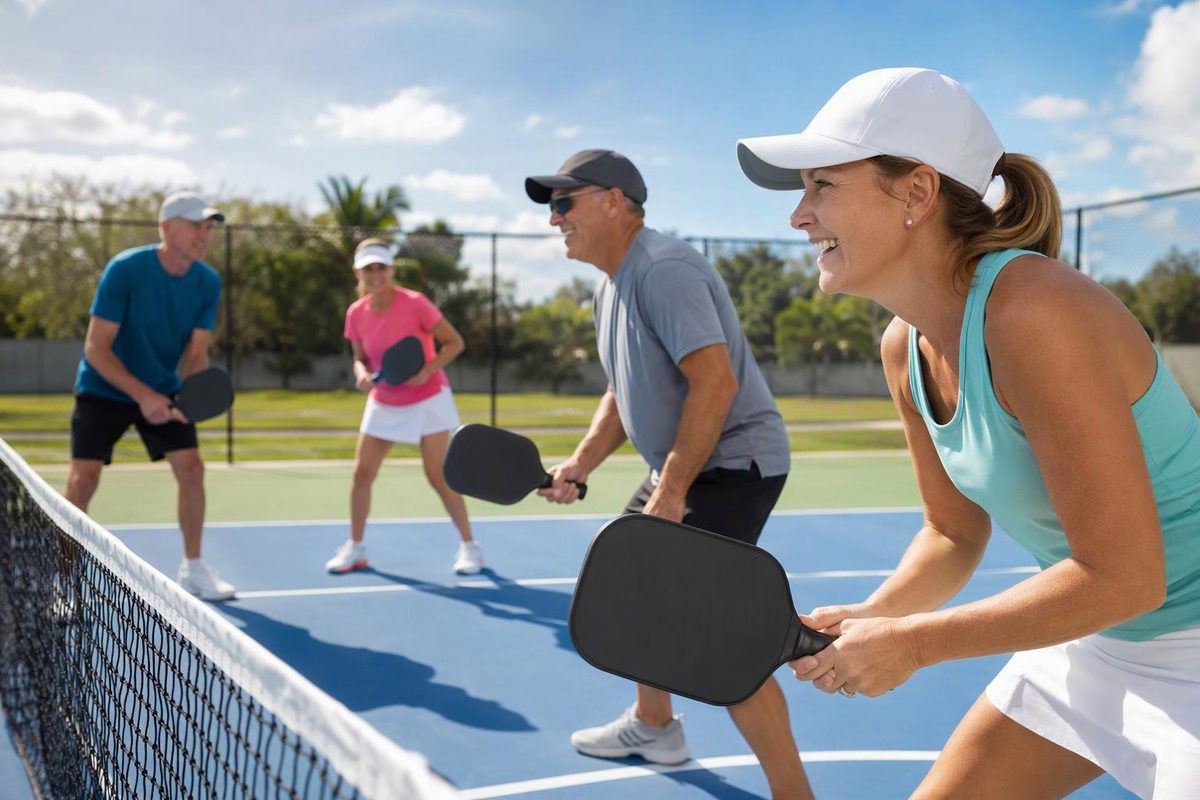
Your pickleball skill level should describe your usual game—not your best shot. A hard serve or one successful drop does not tell the whole story. Look at your consistency, soft shots, court positioning and decisions during rallies.
Also separate a self-rating—your estimate using skill descriptions—from a rating calculated from match results. Use the guide below to find a sensible recreational group and choose what to practice; it does not award an official rating.
What the skill-level numbers mean
These are plain-language summaries of published skill guides. Higher levels build on the skills below them: USA Pickleball’s assessment sheets explicitly make that cumulative expectation part of levels 3.5 through 5.0.
Two terms used below: a dink is a soft shot that bounces in the opponent’s Kitchen, the non-volley zone next to the net. A drop is a soft shot intended to land there from farther back. Knowing their names is different from controlling them during a point.
| Level | Observable signs in your game |
|---|---|
| 1.0–2.0: Getting started | You are learning the rules, serve and scoring. By 2.0, you can sustain short rallies and understand basic doubles positioning. See Pickleball Australia’s guide, adopted from USAPA guidance. |
| 2.5: Building the basics | You can keep score, understand the two-bounce rule, serve into the correct service box and demonstrate basic groundstrokes and volleys. You can sustain a dink rally with beginner players. See the USA Pickleball 2.5 assessment. |
| 3.0: Developing consistency | You can direct a medium-paced forehand and sustain a basic dink rally. Backhand, third-shot and volley control remain limited; you understand positioning but still make frequent unforced errors—misses on balls you could reasonably handle. See the 3.0 assessment. |
| 3.5: Adding control and choices | Your serve is consistent, and you can place serves and returns deep. You sustain medium-length dink rallies, control moderate-paced volleys and begin using third-shot drops or drives to approach the net, with limited success. See the 3.5 assessment. |
| 4.0: Connecting shots and positioning | You control dink height and depth, recognize attackable balls and use third shots to approach the net with moderate success. You can block hard volleys, move with your partner and are starting to execute resets—soft replies that reduce an opponent’s attacking advantage. See the 4.0 assessment. |
| 4.5: Executing with purpose | You place third-shot drops consistently, use dinks with offensive intent and block hard volleys softly into the Kitchen. You create and target coverage gaps, adapt your plan and make fewer unforced errors. See the 4.5 assessment. |
| 5.0: High consistency and adaptability | You use varied dinks to move opponents, choose drops or drives reliably from both sides and change pace easily. You think ahead, create attacking opportunities and quickly adjust to opponents and partners. See the 5.0 assessment. |
| 5.5+: Top-level competition | Consistently high-level performance and tournament wins demonstrate your ability. See Pickleball Australia’s 5.5+ description. |
How to estimate your level honestly
Compare the descriptions with several ordinary games, ideally against different opponents. Ask a coach or experienced organizer to watch if you are unsure.
Look for three things:
- Repeatability: Can you perform the shot during a rally, not just from an easy practice feed?
- Both sides: Does your backhand hold up, or do you repeatedly move around it and leave court space uncovered?
- Decisions: Do you know when to play softly, attack and advance—or do you hit hard regardless of the ball?
Choose the description that best fits your overall play. If your forehand looks like 4.0 but your soft game and positioning fit 3.0, describe that mixed profile rather than claiming the higher level from one strength.
For a session advertised as “3.5,” ask whether that means a self-assessed level or a particular rating system. For tournament entry, check the organizer’s rating and eligibility requirements before choosing a division.
Is your skill level the same as your DUPR?
Not exactly. DUPR, the Dynamic Universal Pickleball Rating, uses match results, rather than awarding a number because you completed a shot checklist. Its published scale runs from 2.00 to 8.00 as of October 2026, so 5.0 is not its upper limit. See DUPR’s rating explanation.
A skill assessment helps identify what to work on. A match-based rating helps describe how you perform against other players. Keep both in their proper roles.
Turn your level into a practice target
Use this short partner check to find a weakness, not to certify a rating:
- Serve and return: Take 10 turns each as server and receiver. Count legal serves and returns landing beyond the receiving court’s midpoint. Separate “in” from “deep.”
- Dink: Stand just behind opposite Kitchen lines and rally softly for two minutes. Note whether misses come from the net, excessive height or loss of balance.
- Third-shot simulation: Start one player behind the baseline and the other at the opposite Kitchen line. Feed a deep ball to the baseline player, who lets it bounce and tries a drop or drive. Continue the rally and judge whether that shot creates a safe chance to advance.
During games, remember why the serving side starts back: the serve must bounce, then the return must bounce before the serving team hits it. Advance after that bounce and your third shot when the opportunity is there; do not run forward simply because you served. Get balanced before the opponent’s next contact. This follows USA Pickleball’s positioning guidance.
Pick one recurring problem for your next session. If serves miss, work on placement. If dinks pop up, work on height control. If you get trapped moving forward, practice third-shot choices and movement. For a fuller session, use the 30-minute partner practice.