
Build Six Pickleball Skills With Clear Practice Checkpoints
Practice six pickleball skills with partner drills and clear checkpoints, from legal Kitchen movement to dink control, deeper returns and smarter shot choices.
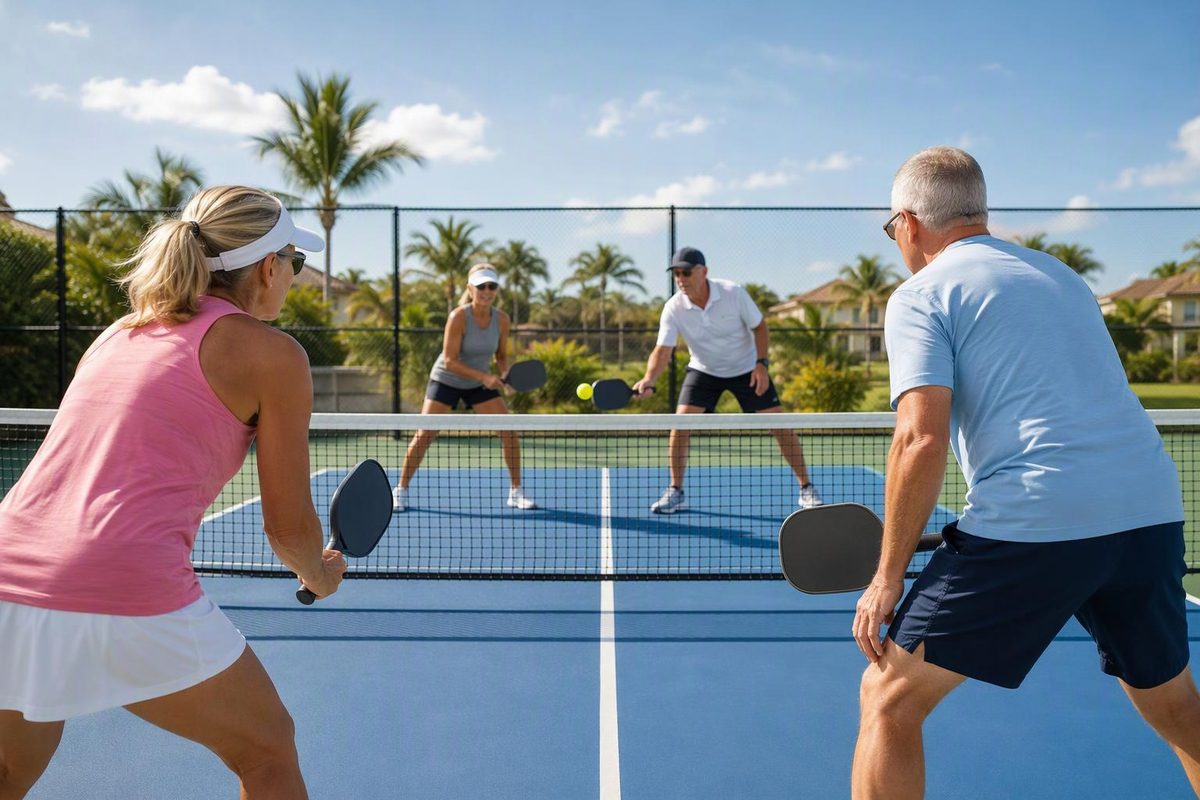
Six useful pickleball skill development examples are legal Kitchen movement, dink control, serve and return depth, drops that support an approach, doubles coordination, and shot selection. Practice each with a specific goal and an observable checkpoint—not just a rally count or points won. Choose one or two per session; the counts below are practice targets, not official skill-rating standards.
Choose the mistake you want to reduce; the tool matches it to a practice and checkpoint.
Match A Mistake To A Drill
Suggested practice targets, not official skill-rating standards.
Practice Legal Kitchen Recovery
Drill: Play a bounced short feed inside the Kitchen, establish both feet outside, then volley the next gentle feed. Repeat five sequences and switch roles.
Checkpoint: Count complete legal sequences. Stay outside through the volley and until you regain balance and control.
Practice Dink Control
Drill: Take ten forehand feeds and ten backhand feeds. Aim comfortably inside the Kitchen and move your feet to the ball.
Checkpoint: Record net misses, balls beyond the Kitchen and balls your partner could comfortably attack.
Practice Depth With Margin
Drill: Hit ten legal serves, then return ten partner serves. Use broad rear-half targets with margin from the lines.
Checkpoint: Count balls in and balls reaching your depth target separately. Reduce pace or enlarge the target if misses increase.
Practice The Drop And Reply
Drill: Start halfway between baseline and Kitchen line. Drop a bounced feed into a generous Kitchen target; have your partner play the next ball.
Checkpoint: Advance on a manageable reply. Judge whether you gained ground in balance rather than rushing into an attack.
Practice Middle-Ball Ownership
Drill: With four players, feed gentle balls left, middle and right. The receiving pair shifts together and calls “mine” early.
Checkpoint: Over ten middle feeds, count late calls, double swings and untouched balls. Agree on ownership.
Practice Soft-Or-Firm Decisions
Drill: Mix low dinks with occasional higher feeds. Keep low balls soft; use a controlled firmer shot only when balanced with contact in front.
Checkpoint: Track the decision separately from whether the shot landed in. A higher feed is not an instruction to attack.
Source: the six drills and checkpoints in this article; rule distinctions follow the 2026 USA Pickleball rulebook. Counts are suggested practice targets.
1. Turn Kitchen Rule Knowledge Into Legal Movement
Goal: Handle a bounced ball in the Kitchen and recover to be ready for the next volley.
You can step into the Kitchen—the non-volley zone—to hit a ball that has bounced. You cannot volley—a shot hit before the bounce—while touching the Kitchen, including its boundary lines. Your volley momentum cannot carry you into it, even after the rally ends. After touching the Kitchen, both feet must contact the playing surface completely outside it before you volley again. These distinctions are covered in the 2026 USA Pickleball rulebook.
That makes the skill more specific than “know the Kitchen rule”: play a short ball, recover outside the Kitchen, and be ready for the next shot legally.
Practice: With a partner across the net, start just behind your Kitchen line. Have your partner feed a short ball that requires you to step inside. Let it bounce, return it softly, then recover so both feet touch down outside the Kitchen. Your partner then feeds a gentle ball you can volley from outside. Repeat five sequences, then switch roles.
Checkpoint: Count complete, legal sequences—not just successful returns. Did you establish both feet outside before the volley? Did you stay out through the follow-through and until you regained balance and control of your movement?
Use It In Doubles: A short dink is not a reason to avoid entering the Kitchen. Enter when needed; recover so you have the option to volley the next ball.
2. Develop Dink Control, Not Just A Rally Count
Goal: Send a soft shot into the opponent’s Kitchen without repeatedly leaving it high enough for an easy attack.
Practice: Stand opposite a partner at the Kitchen lines. Start with cooperative straight-ahead dinks, letting each ball bounce. Aim at a broad area comfortably inside the Kitchen rather than its edges. Use bent knees, a short backswing and contact in front—basic mechanics emphasized in USA Pickleball’s positioning guidance.
Have your partner feed ten balls to your forehand, then ten to your backhand. Move your feet to reach the ball rather than stretching from a fixed stance. Switch roles afterward.
Checkpoint: Record balls into the net, balls beyond the Kitchen and balls your partner could comfortably attack. A longer rally is useful only if you are also controlling the ball.
Use It In Doubles: Keep a soft exchange manageable before trying to pull an opponent wide. See the dink explanation for more detail on this shot.
3. Add Purposeful Depth To Serves And Returns
Goal: Keep the ball in while directing it deeper, instead of adding speed indiscriminately.
Practice: Choose a broad target in the rear half of the diagonal service court. Hit ten serves with your usual legal serving motion. Separately, have your partner serve ten balls to you; return them toward the rear half of their court with margin from the baseline and sidelines.
Keep two counts for each batch: balls in the legal court and balls reaching your intended depth.
Checkpoint: If deeper attempts produce more misses, enlarge the target or reduce pace. Keep reliability and depth as separate measures so one does not hide the other.
Use It In Doubles: The receiver must let the serve bounce, and the serving side must let the return bounce before hitting it. That is the two-bounce rule, not a requirement for two bounces on either side. Stay back to handle the return when serving; after returning, look for an opportunity to move forward.
4. Connect A Drop To Your Next Movement
Goal: Hit a soft ball from farther back that gives you time to approach the Kitchen line.
Practice: Start halfway between your baseline and Kitchen line, with your partner across the net at their Kitchen line. Have them feed a ball that bounces in front of you. Send a soft drop toward a generous Kitchen target. Once you can do this with control, repeat from farther back.
Let your partner play the next ball rather than ending every attempt at the landing. Move forward when your drop produces a manageable reply; stay ready to defend when it sits up. USA Pickleball’s third-shot guidance recommends advancing after a quality shot and holding back when it is not strong enough.
Checkpoint: Judge both the drop and the reply. Did the shot let you gain ground while remaining balanced, or did you rush into an attack?
Use It In Doubles: A third-shot drop is a way to create an approach, not an automatic instruction to run to the net. Learn the drop-or-drive choice before making every third shot the same.
5. Move And Communicate As A Doubles Pair
Goal: Cover the court together without both players chasing the same ball.
Practice: Use four players. Two cooperate at one Kitchen line while the other pair feeds gentle balls from the opposite side. Alternate feeds left, middle and right. The receiving pair shifts with the ball, and one player calls “mine” early on middle balls.
Keep the pace slow enough to notice positioning. USA Pickleball recommends following the ball, staying linked with your partner and resetting your balance before opponents hit.
Checkpoint: Over ten middle feeds, count late calls, double swings and balls neither player takes. Discuss who takes which ball rather than assuming one blanket rule will fit every situation.
Use It In Doubles: Clear ownership and coordinated movement matter even when neither player is hitting difficult shots.
6. Choose A Shot Under Manageable Pressure
Goal: Recognize when to keep the ball soft and when a higher ball offers an attacking opportunity.
Practice: At the Kitchen lines, have your partner mix low dinks with occasional comfortable, higher feeds. Return the low balls softly. On a higher ball you can contact in front while balanced, use a controlled firmer shot toward a large target. Do not force an attack simply because the feed was intended to be high.
Checkpoint: Track decisions separately from execution: a sensible soft shot can still miss, while a poor attack can happen to land in. Ask whether you were balanced and had room to hit forward, rather than lifting a low ball hard.
Use It In Doubles: Patience and recognition of attackable balls are part of the progression described in USA Pickleball’s skill-level guidance.
Track The Skill You Meant To Develop
For your chosen example, note the number of attempts, the intended outcome and the most common error. Repeat under similar conditions before adding speed, smaller targets or unpredictable feeds.
Then take one cue into a game—such as “recover outside before volleying” or “stop balanced before their contact.” Count those opportunities, not just points won. To combine the skills into a session, use the 30-minute partner practice.