
Pickleball Strategy: When to Defend, Build or Attack
Use ball height, balance and available targets to choose smarter shots at the Kitchen line, then practice those decisions with a 10-minute partner drill.
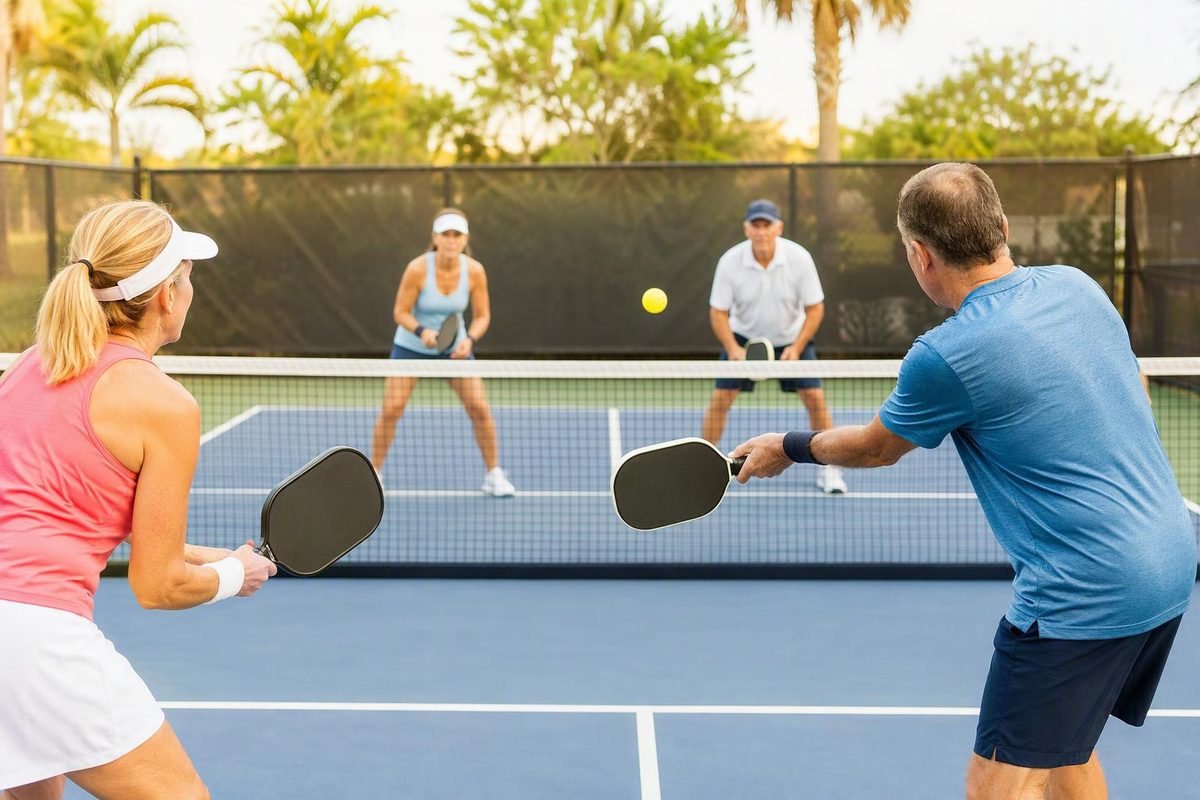
Good recreational doubles strategy starts with choosing a shot that fits the ball you actually have. When you’re stretched or rushed, defend and recover. When the ball is low but manageable, build the rally. When it sits high and you’re balanced, look to attack.
This guide focuses on those choices at the Kitchen line. For starting positions, third-shot movement and team coverage, use the doubles team point plan.
First, know when you can volley
The Kitchen—the non-volley zone—is not a no-entry area. You may step into it to hit a ball that has bounced, but you cannot volley there: hit the ball before it bounces. The Kitchen line counts as part of the zone, and your volley’s momentum cannot carry you into it, even after the ball is dead. These limits appear in USA Pickleball’s rules summary.
The opening bounces matter, too: the receiver must let the serve bounce, then the serving team must let the return bounce. After that, either team may volley, subject to the Kitchen restrictions. See the two-bounce explanation for that sequence.
Choose the shot’s job
Use these cues as a starting framework, not a rule that every low ball must be soft or every high ball must be hit hard.
| What you can observe | Your priority | A practical choice |
|---|---|---|
| You’re reaching, late or being pushed sideways | Defend and recover | Use a controlled reply with a generous target; avoid a sharp angle while off balance |
| You’re balanced at the Kitchen line, but contact is below net height | Build the rally | Dink into the opponent’s Kitchen rather than forcing a hard upward attack |
| The ball sits comfortably above net height, with contact in front of you | Apply pressure | Use a compact attack toward an open gap or the opponents’ feet, with room inside the lines |
A dink is a soft shot intended to bounce in the opponent’s Kitchen. In The Dink’s account of coach Jordan Briones’s guidance, he recommends dinking very low balls rather than forcing an attack, and using a controlled dink instead of a panicked slap under pressure. He also recommends targeting opponents’ feet when they are moving toward the Kitchen line.
Building is not simply waiting. Choose a placement that makes the opponent move, while leaving yourself enough margin to keep the ball in play. The immediate goal is a less comfortable reply, not a winner from every dink.
Reassess after every reply
If a dink pulls you wide, first get the ball back safely and recover your position. Don’t demand a sideline winner from a stretched contact. If the next ball floats high, reassess: now an attack may fit.
Likewise, an attack does not guarantee another attacking opportunity. If the opponent’s counter comes back low at your feet, switch back to defending rather than trying to hit even harder.
Get balanced before the opponent strikes so you can respond to the next ball. USA Pickleball’s positioning guidance recommends a split step—a small hop just before contact—to reset your balance and prepare to react.
Practice the choice for 10 minutes
Setup: Two players face each other just behind the Kitchen lines, using one half of the court. Start each rally with a gentle bounced feed rather than a serve. Keep replies within that half-court.
- First three minutes: Dink cooperatively. Notice contact height and whether you’re balanced.
- Next four minutes: Vary dink placement enough to make each other move. Allow controlled attacks on comfortably high balls; keep low or stretched contacts soft. Use placement rather than maximum pace. Restart after each error.
- Last three minutes: Play out the rallies under those same limits. After each one, identify one decision: defend, build or attack.
Checkpoint: Review the decision separately from the result. A sensible dink can miss; a forced attack can win. Ask whether your choice matched your balance, contact height and available target—not just whether you won the rally.