
Learn a Pickleball Slice Serve Without Losing Depth
Learn legal slice-serve mechanics, how sidespin differs from backspin, when to use it in doubles, and a simple target practice progression.
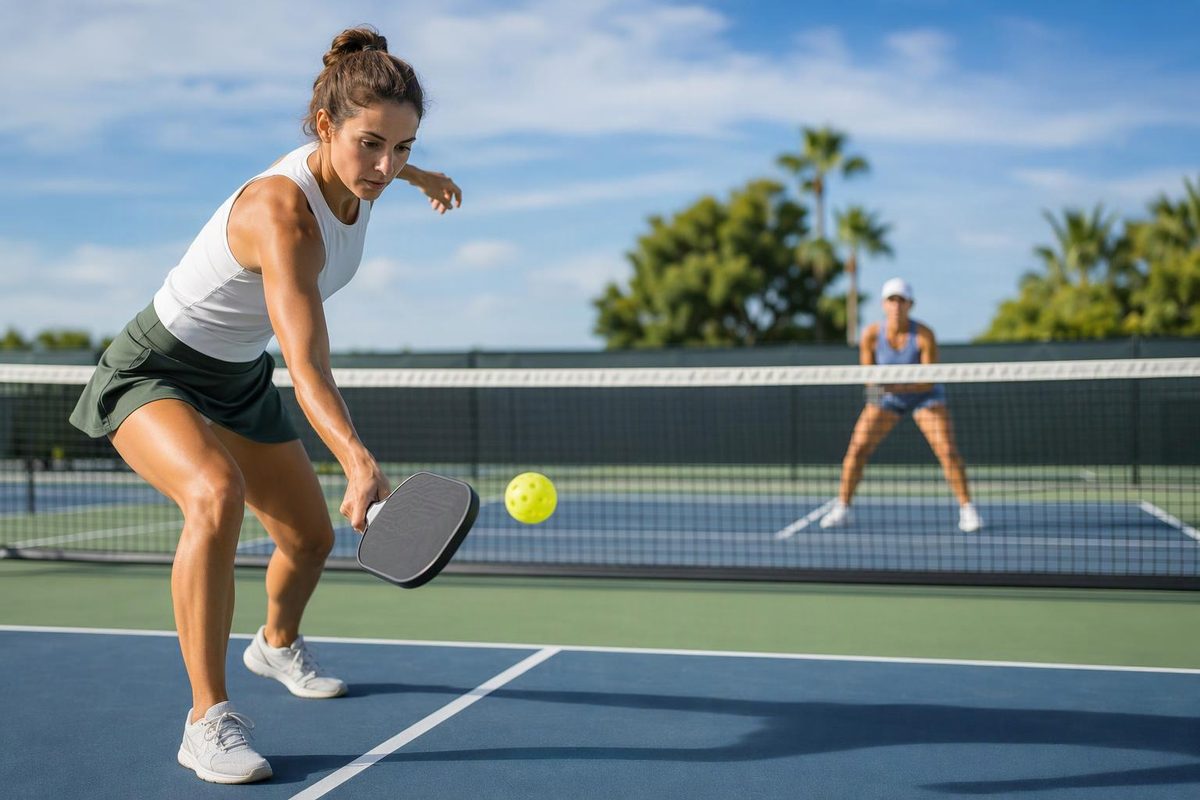
You may create slice-serve spin with your paddle at contact—but you must still meet the rules for your serve type. Under the 2026 USA Pickleball rules, you must not deliberately manipulate the ball to add spin before hitting it. A volley serve requires a clearly upward paddle arc, contact clearly no higher than your waist, and the paddle head’s highest point clearly no higher than the highest part of your wrist joint.
For learning a slice, try a drop serve: release the ball from a natural, unaided height without propelling it, let it bounce, then hit. Those three volley-serve motion restrictions do not apply. Your release must be visible to the receiver. Foot-position and diagonal-placement rules still apply, and a serve landing on the Kitchen line is out. These requirements are in Sections 7 and 8 of the rulebook. See the basic serve setup if you need the full checklist.
What “slice” means on a serve
The term can describe backspin, sidespin, or a mixture. Backspin rotates backward relative to the ball’s flight; sidespin adds lateral rotation. In his serving guidance, player and coach Eric Roddy describes slice serves as producing backspin or sidespin.
The distinction matters:
- Brushing across the ball’s side adds sidespin, which can curve the flight.
- Brushing underneath adds backspin, which can make the ball float and skid after landing.
Engage’s spin-serve guidance explains those contact differences. Don’t judge the serve only by visible curve: watch where it lands and how the receiver handles the bounce.
Build a controlled forehand slice
Start with a sidespin-oriented drop serve rather than a big downward chop.
- Set up comfortably behind the baseline. Use a Continental, or “handshake,” grip as a starting point. Keep enough space to swing without crowding the bounce. If needed, review how to hold your paddle.
- Choose a generous target. Aim into the deeper middle portion of the diagonal service court, not at a sideline. You need room to discover the ball’s curve.
- Drop into a repeatable contact area. Release naturally in front of your paddle-side hip. Let the bounce bring the ball into comfortable reach rather than lunging for it.
- Open the face slightly. “Open” means tilted a little upward. Avoid turning it into a scoop.
- Swing forward while brushing across. For this forehand version, let the paddle travel from outside toward the middle of your body across the ball’s outer side. Keep a forward component: grazing sideways without driving through can leave the serve short.
- Finish smoothly across your body. Keep the wrist quiet while learning. Don’t add a last-second flick to chase more spin.
The slightly open face, across-ball brush and across-body finish follow Pickleball Union’s slice-serve instruction. Left-handers mirror the setup; neither hand should assume the same aim will work from both serving sides.
Checkpoint: Can you reach your target with a balanced finish and repeatable contact? If not, reduce the brush before adding speed.
Fix the result you can see
- Floating high or sailing long: Try less paddle-face opening and less cutting underneath. Restore a more forward strike.
- Landing short or hitting the net: Reduce the sideways graze and give the ball more forward travel and net clearance.
- Curving wide: Move your target inward. Don’t compensate by twisting your wrist at contact.
Change one thing at a time so you can tell what helped.
Use it as a variation in doubles
A slice is useful when it changes the receiver’s timing or makes them adjust their feet—not simply because it looks different. Keep your reliable serve as the default. Roddy’s serving advice prioritizes consistency and depth and warns that excessive spin can produce misses.
Try an occasional slice toward a receiver’s less comfortable side, with margin inside the lines. If it repeatedly lands short and helps them move forward comfortably, return to your regular serve.
After serving, stay ready for the return rather than following your curved ball toward the Kitchen. Your team must let the return bounce under the two-bounce rule.
A simple comparison drill
Place a flat target in the deeper middle portion of the receiving service court. Keep loose balls clear of the playing area.
- Hit 10 regular serves, recording serves in and target hits.
- Hit 10 mild slice serves at the same target. Record the same results.
- Repeat from the other serving side, adjusting your aim for the curve.
- With a partner receiving, alternate regular and slice serves. Ask which requires more adjustment; also watch whether the slice produces shorter returns or merely easier ones.
As a practice goal, get at least eight of ten slices in before experimenting with wider placement. If added spin costs you depth or reliability, make the slice smaller—not more dramatic.